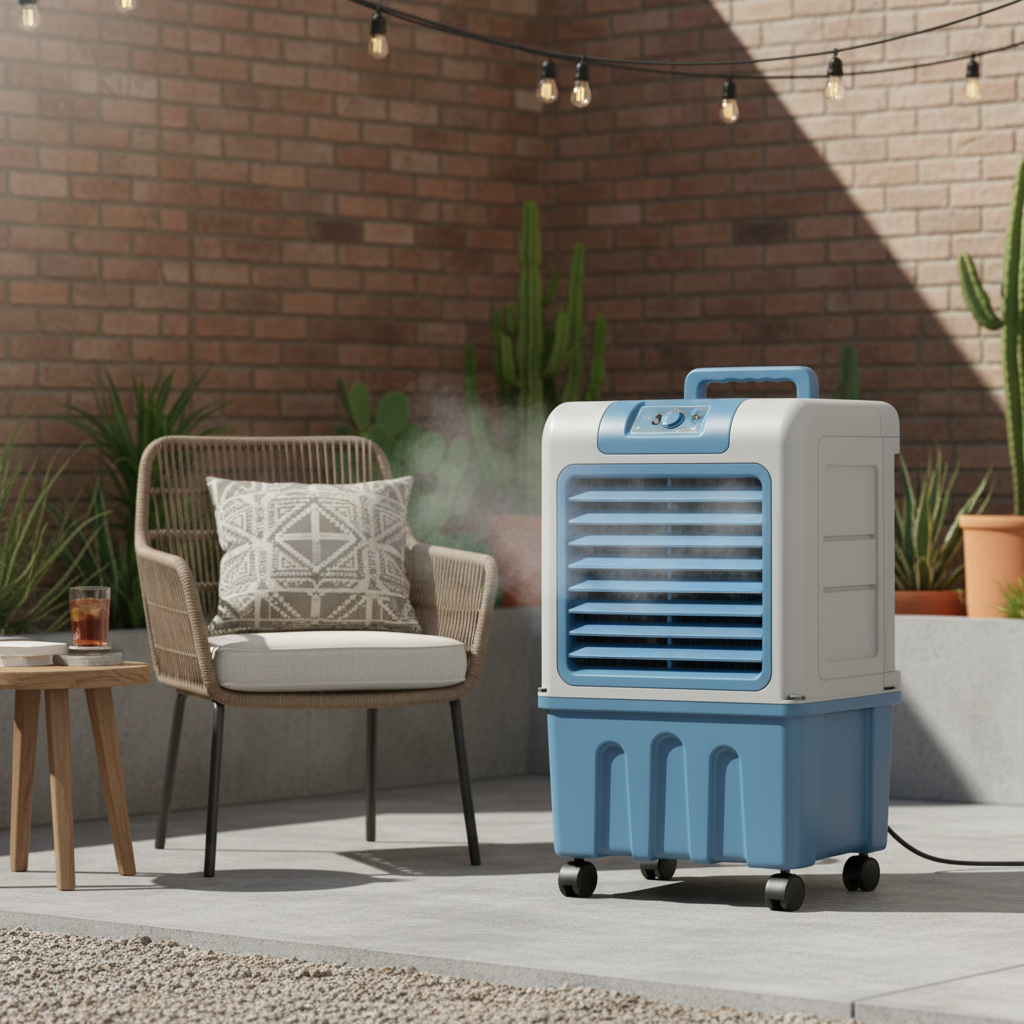
Is your air cooler blowing warm air, or has its cooling efficiency plummeted? You’re not alone. A common culprit behind poor air cooler performance is clogged water distribution tubes. These vital components are responsible for evenly spreading water across the cooling pads, and when they fail, your air cooler struggles to do its job. The good news is that restoring your air cooler’s optimal performance is often a straightforward DIY task, saving you time and money.
Understanding Your Air Cooler’s Water Distribution System
Air coolers, also known as evaporative or swamp coolers, cool the air through a natural process of evaporation. Warm, dry air is drawn into the unit and passes over water-soaked cooling pads. As the water evaporates from the pads, it absorbs heat from the air, resulting in a cooler, more humid breeze. This ingenious system relies heavily on a consistent water supply to the pads.
The water distribution tubes are the lifelines of this system. Connected to the water pump, they carry water from the reservoir to the top of the cooling pads, ensuring they remain thoroughly saturated. Without proper water distribution, parts of the pads can dry out, severely hindering the evaporation process and your cooler’s ability to provide effective relief from the heat.
Several factors can lead to clogging in these critical tubes. The most frequent issue is the accumulation of mineral deposits, often referred to as scale or calcium buildup, especially in areas with hard water. Over time, these minerals can solidify inside the narrow tubes and restrict water flow. Beyond mineral buildup, organic culprits like algae, mold, and mildew can flourish in the damp environment of an air cooler, forming slimy blockages. Dust, dirt, and other airborne debris, inevitably drawn into the cooler, can also settle in the water tank and eventually make their way into and obstruct the distribution tubes. Even small insects or spiderwebs can create unexpected blockages.
Essential Tools and Safety Precautions
Before you begin any maintenance on your air cooler, safety is paramount. Always ensure the unit is completely unplugged from its power source to prevent electrical shock. It’s also wise to wear protective gloves to shield your hands from dirt, cleaning solutions, and any sharp edges within the cooler.
To effectively unclog your air cooler’s water distribution tubes, you’ll need a few common household tools:
- Screwdriver set: For opening the cooler’s casing and accessing internal components.
- Buckets or a large basin: To drain the old water and for soaking components.
- Stiff brush or kitchen sponge: For scrubbing the water tank and other surfaces.
- Small wire, pipe cleaner, or snake auger: These are crucial for physically clearing blockages inside the tubes. A flathead screwdriver can also be useful for carefully widening small obstructed holes in distributor trays.
- White vinegar: An excellent natural descaler and disinfectant.
- Commercial descaler (optional): For stubborn mineral buildup, a specialized descaling product can be very effective.
- Garden hose or water bottle: For flushing components.
Gathering these items beforehand will make the cleaning process smoother and more efficient.
Step-by-Step Guide: How to Unclog Water Distribution Tubes
Restoring your air cooler’s optimal water flow is a straightforward process. Follow these steps carefully to effectively clear blockages from its water distribution tubes.
Step 1: Disconnect and Drain
|
Our Picks for the Best Air cooler in 2026
As an Amazon Associate I earn from qualifying purchases.
|
||
| Num | Product | Action |
|---|---|---|
| 1 | Portable Air Conditioners, Swamp Cooler Portable AC Unit for Room, Windowless Cooling Fan That Blow Cold Air w/Remote 5L Tank 12 Speeds 9H Timer, Evaporative Air Cooler for Bedroom Garage (White) |

|
| 2 | DREO Tower Fan for Bedroom, 43" Cooling Fans That Blow Cold Air 2026 Upgraded, Evaporative Air Cooler, Quiet 80° Oscillating Floor Fan, Easy Cleaning, APP Control, 4 Modes & 4 Speeds, 12H Timer, Black |
|
| 3 | Arctic Air Pure Chill 2.0 Evaporative Air Cooler by Ontel - Powerful, Quiet, Lightweight and Portable Space Cooler with Hydro-Chill Technology For Bedroom, Office, Living Room & More,Blue |
|
| 4 | DREO Evaporative Air Swamp Cooler, 43" Cooling Fans that Blow Cold Air 2026 Upgraded, 80° Oscillating Floor Fan for Bedroom, Easy Cleaning, APP Control, Ice Packs, 4 Speeds & 4 Modes, 12H Timer, White |
|
| 5 | 3-in-1 Portable Evaporative Air Cooler - 2000 CFM Swamp Cooler with 6.6-Gal Dual Tank & 4 Ice Packs, Remote Control, 12H Timer, Oscillating Cooling Fan for Large Room, Office, Mother's Day |
|
| 6 | Evaporative Air Cooler - Swamp Cooler with 3L Water Tank, 3 Modes & 3 Speeds, Remote Control, 12H Timer, 50° Oscillating Portable Bladeless Cooling Tower Fan For Room Bedroom Office Mother's Day |
|
| 7 | Portable Air Conditioners, 3-IN-1 Evaporative Air Cooler,Cooling Fans that Blow Cold Air with 60° Oscillation,9H Timer,3 Modes & 12 Speeds, 8 Ice Packs, Windowless Portable AC for Room,Bedroom,Office |
|
| 8 | LEVOIT Tower Fan for Bedroom, 90° Oscillating Standing Fan with 28dB Quiet for Sleep, 25ft/s Velocity, 12H Timer, 5 Speeds 4 Modes, Remoter, Bladeless Room Fan for Home, Office, Indoor, 36 inch, White |
|
| 9 | Midea 5,000 BTU EasyCool Small Window Air Conditioner - Cool up to 150 Sq. Ft. with Easy-to-Use Mechanical Controls and Reusable Filter, Perfect for Small Bedroom, Living Room, Home Office |
|
| 10 | DREO Tower Fan for Bedroom, 2026 Upgraded DC Motor, 28ft/s High Velocity, 20dB Ultra Quiet Standing Fan, 8 Speeds 4 Modes, 90° Oscillating Bladeless Fan for Indoors, Floor Fans with Remote, Black |
|
First, completely unplug your air cooler from the electrical outlet. Next, locate the drain plug, usually at the bottom or back of the water reservoir, and remove it. Allow all the water to drain into a bucket or directly into a floor drain if outdoors. This also removes any loose debris or stagnant water that might be contributing to the problem.
Step 2: Access the Tubes and Pump
Once the tank is empty, you’ll need to open your air cooler to access its internal components. This typically involves removing the back panel and then carefully taking out the cooling pads. These pads often slide out or are held in place by clips. Set them aside for separate cleaning. With the pads removed, you should be able to clearly see the water pump situated in the tank and the water distribution tubes (sometimes called distributor lines) that run from the pump up to the top of where the pads sit.
Step 3: Initial Inspection and Manual Cleaning
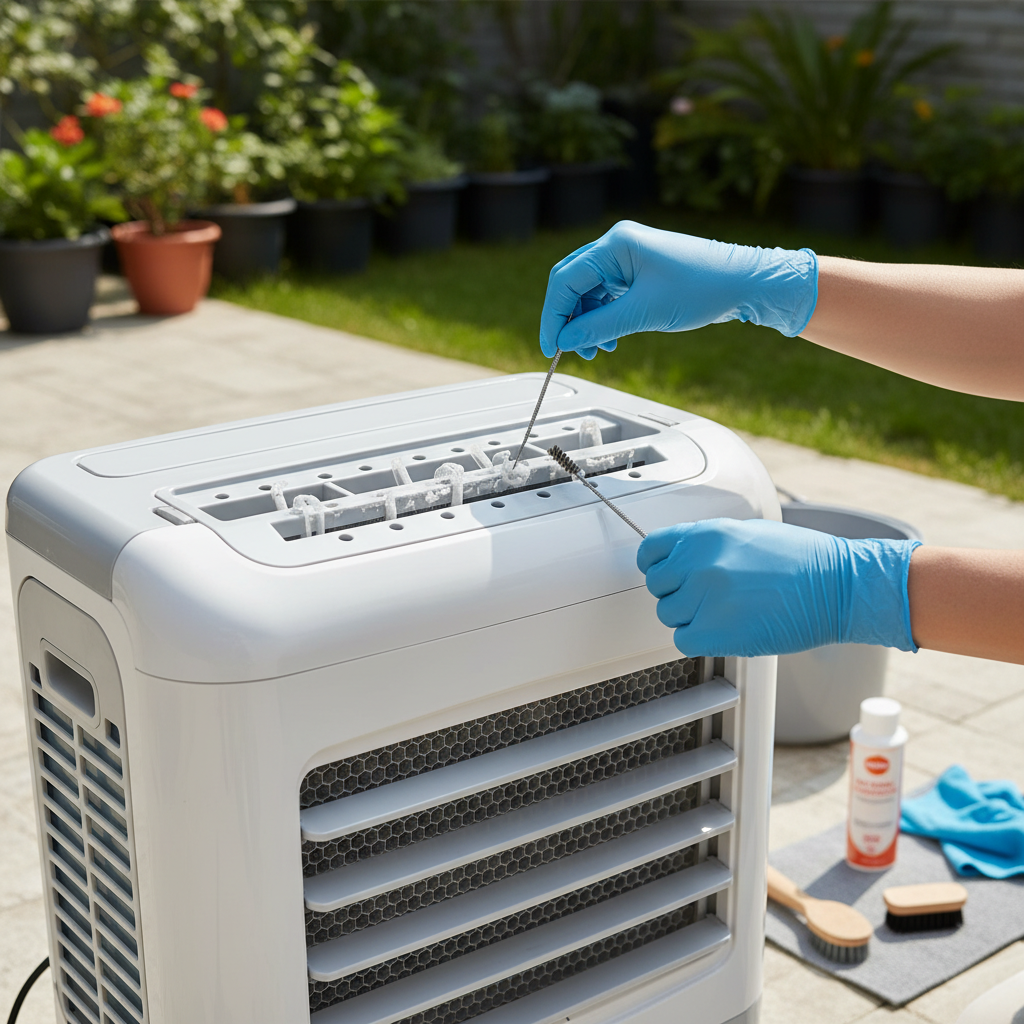
Before using cleaning solutions, visually inspect the water distribution tubes and any distributor trays for obvious blockages. Look for visible mineral deposits, clumps of algae, or trapped debris. Gently try to pick out any large pieces of debris with your fingers or a pair of pliers. For tubes with small openings, a flathead screwdriver can be used to carefully widen any obstructed holes, enhancing water flow. [cite: 2 (from search results, first block)]
Step 4: Soaking with Cleaning Solutions
If mineral buildup or slimy residue is evident, soaking is often the most effective method.
- White Vinegar Method: White vinegar is a highly effective, natural descaler. You can remove the tubes and soak them in a basin filled with a solution of equal parts white vinegar and water for at least an hour, or up to several hours for heavy buildup. [cite: 1, 2 (from search results, second block)] If the tubes cannot be easily removed, you can fill the air cooler’s water tank with this vinegar solution and run the pump on a low setting for about 30 minutes, allowing the solution to circulate through the tubes and break down deposits. Ensure the area is well-ventilated as vinegar has a strong odor.
- Commercial Descaler Method: For extremely stubborn mineral deposits, a commercial descaling product designed for evaporative coolers can be used. Always follow the manufacturer’s instructions carefully for dilution and soaking times. Some products, like CLR, are known to effectively remove scale. [cite: 3 (from search results, second block)]
Step 5: Brushing and Flushing
After soaking, take a small wire, a pipe cleaner, or a flexible snake auger and insert it into each water distribution tube. Work it back and forth to dislodge any remaining blockages. [cite: 2 (from search results, first block), 4 (from search results, second block)] Flush the tubes thoroughly with clean water, either under a tap or using a garden hose, until water flows freely and clearly.
Step 6: Cleaning the Water Tank and Pump
While you have the cooler open, take the opportunity to clean the water tank and pump. Scrub the inside of the water reservoir with a stiff brush or sponge and soapy water to remove any dirt, slime, or mineral residue. [cite: 2 (from search results, second block)] Inspect the water pump itself. Many pumps have a removable filter or cover that can accumulate debris. Clean this thoroughly. You can also inspect the impeller (the rotating part of the pump) for any clogs and clear them with a small brush. [cite: 3 (from search results, second block)]
Step 7: Reassembly and Testing
Once all components are clean and dry, reassemble your air cooler. Carefully place the cooling pads back into position, ensuring they are seated correctly. Reattach any panels. Fill the water tank with clean water. Plug the air cooler back in and turn it on, observing the water flow. The water should now be evenly distributed across all cooling pads, and your cooler should operate much more efficiently.
Preventing Future Clogs: Maintenance Tips
Regular maintenance is the key to preventing water distribution tubes from clogging again and ensuring your air cooler operates at peak performance for years to come.
- Regular Cleaning Schedule: Make it a habit to clean your air cooler regularly. A light cleaning every 2-4 weeks during peak usage, and a thorough deep clean at the end of each cooling season, can significantly reduce buildup. This includes draining and cleaning the water tank, inspecting pads, and checking tubes.
- Using Filtered Water: If you live in an area with hard water, consider using filtered water in your air cooler. Filtered water has fewer minerals, which drastically slows down the formation of calcium and limescale deposits in the tubes and tank.
- Draining and Drying When Not in Use: When your air cooler won’t be used for an extended period, especially during off-season storage, completely drain the water tank and allow all internal components, including the cooling pads and tubes, to dry thoroughly. This prevents the growth of algae, mold, and mildew, which thrive in stagnant, damp environments.
- Periodic Descaling Practices: Even with regular cleaning, some mineral buildup can occur. Periodically run a diluted white vinegar solution or a commercial descaler through your air cooler’s system, as described in Step 4, to dissolve any accumulating deposits before they become major blockages. This proactive approach saves you from more intensive cleaning later.
“Consistent maintenance, especially in areas with hard water, is not just about cleaning; it’s about preserving the lifespan and efficiency of your air cooler. Neglecting the tubes is like ignoring the arteries of your machine.” – Admin, reviewshs.com, Air Cooler Technician
Troubleshooting Common Water Flow Issues
Even with regular cleaning, you might occasionally encounter water flow problems. Here’s how to troubleshoot some common issues:
- Low Water Flow: If water is flowing but seems sluggish, first check the water level in the tank; it might simply be too low. If the level is adequate, inspect the water pump to ensure it’s running correctly and its filter isn’t clogged. Finally, re-examine the distribution tubes for partial blockages that might have been missed or have reformed.
- Uneven Water Distribution: When some cooling pads are wet and others are dry, it indicates uneven water distribution. This often points to partially clogged holes in the distributor tubes or tray directly above the dry areas. Use a small wire or screwdriver to clear these specific holes. Also, ensure the cooling pads are correctly positioned and haven’t shifted, which could block water flow to certain sections.
- No Water Flow: If no water is flowing at all, the first thing to check (after ensuring the unit is plugged in and turned on) is the water pump. Listen for a humming sound; if you hear nothing, the pump might be faulty and require replacement. Alternatively, a severe blockage in the main tube leading from the pump could be the cause. In rare cases, a broken water pump hose could also prevent water from reaching the distribution system. [cite: 5 (from search results, second block)]
Conclusion
A well-maintained air cooler provides effective and energy-efficient cooling, and understanding how to unclog its water distribution tubes is a valuable skill for any owner. By following these simple steps—from disconnecting and draining to cleaning with vinegar or a descaler, and finally reassembling and testing—you can easily restore your air cooler’s performance. Remember, consistent cleaning and proactive maintenance are your best defense against clogs and ensure a refreshing breeze when you need it most. Don’t let a minor blockage disrupt your comfort. What’s your go-to cleaning hack for air cooler maintenance?
Frequently Asked Questions
What causes water distribution tubes to clog in air coolers?
Water distribution tubes commonly clog due to mineral deposits from hard water, which build up over time. Additionally, algae, mold, dust, and debris that enter the air cooler’s water tank can accumulate and obstruct the narrow pathways within the tubes.
How often should I clean my air cooler’s water tubes?
For optimal performance and to prevent clogs, it’s recommended to clean your air cooler’s water distribution tubes every 2-4 weeks during regular use. A more thorough cleaning, including descaling, should be performed at least once per cooling season or before storing the unit for an extended period.
Can I use bleach to clean air cooler tubes?
While some strong cleaners can remove buildup, using bleach directly in air cooler tubes is generally not recommended as it can damage certain materials, create harmful fumes when mixed with other residues, and potentially leave a lingering odor. White vinegar is a safer and highly effective alternative for descaling and disinfecting.
Is hard water a major problem for air coolers?
Yes, hard water is a significant problem for air coolers because it contains high levels of minerals like calcium and magnesium. As water evaporates, these minerals are left behind, forming stubborn scale deposits that can clog water distribution tubes, pumps, and cooling pads, reducing efficiency and eventually causing malfunctions.
What are the signs of clogged water distribution tubes?
Signs of clogged water distribution tubes include reduced cooling efficiency, unevenly wet cooling pads (some areas dry while others are damp), low or intermittent water flow, and unusual gurgling or splashing sounds coming from the cooler. In severe cases, there may be no water flow to the pads at all.