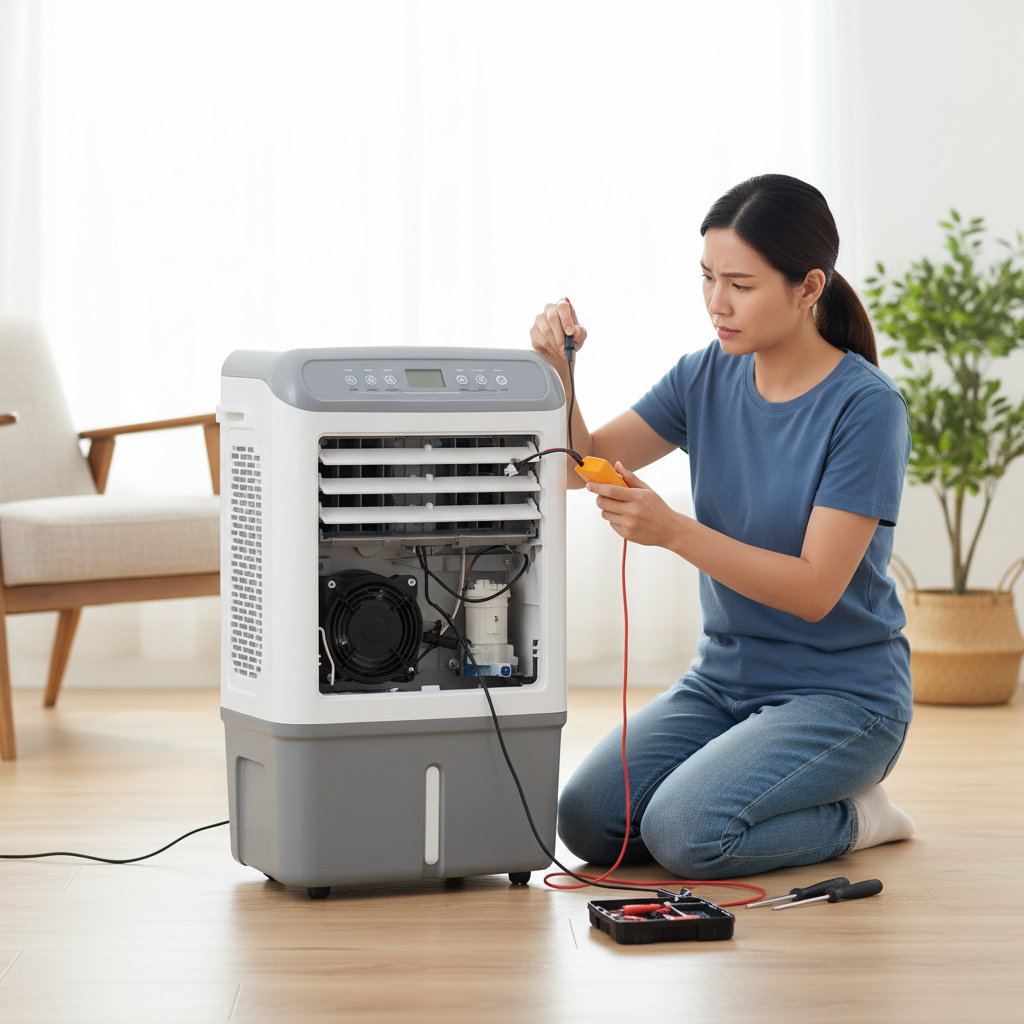
The relentless rise in global temperatures has ignited an urgent demand for cooling solutions. Yet, our current reliance on energy-intensive and water-guzzling conventional systems poses a significant environmental dilemma. Traditional air conditioning units consume vast amounts of electricity and often use refrigerants with high greenhouse gas potential, while standard evaporative coolers, despite their energy efficiency, can be major water consumers. The imperative to find sustainable alternatives has never been clearer, pushing innovators towards groundbreaking “waterless” or highly water-efficient evaporation technologies that promise to revolutionize how we stay cool. This article delves into the cutting-edge advancements in water-conscious cooling, exploring how these innovations are addressing both the climate crisis and escalating energy demands.
Understanding Traditional Evaporative Cooling and Its Limitations
Evaporative cooling, often referred to as “swamp cooling,” is a time-tested method that harnesses the natural phenomenon of water evaporation to lower air temperatures. These systems draw warm outdoor air over water-saturated pads, causing the water to evaporate and absorb heat from the air, which then cools and is circulated into a space. The primary advantages of traditional evaporative coolers lie in their energy efficiency, often consuming 50% to 75% less electricity than compressor-based air conditioners, and their lower installation and maintenance costs. They also introduce fresh, filtered air into a space, improving indoor air quality compared to recirculating AC systems.
However, traditional evaporative cooling systems come with significant drawbacks. Their effectiveness is largely limited to hot, dry climates because they add humidity to the air, making them unsuitable for regions with high ambient humidity. More critically, they require a continuous supply of water to keep the pads saturated, leading to substantial water consumption. This reliance on a constant water source is unsustainable in an era of increasing water scarcity, prompting the industry to seek more resource-efficient designs. Prolonged use or operation in humid conditions can also lead to issues like moisture buildup, which may foster mold and mildew growth.
Pioneering “Zero-Water” Evaporation in Data Centers
The burgeoning demand for artificial intelligence (AI) and cloud computing has led to an explosion in data center construction, each generating immense amounts of heat. Traditional data center cooling, heavily reliant on evaporative systems, can consume up to 1.5 million liters of water per day for a single hyperscale facility, exerting immense pressure on local water resources. In response, leading technology companies are spearheading a paradigm shift towards “zero-water” or highly water-efficient cooling.
Closed-Loop Liquid Cooling
|
Our Picks for the Best Air cooler in 2026
As an Amazon Associate I earn from qualifying purchases.
|
||
| Num | Product | Action |
|---|---|---|
| 1 | Portable Air Conditioners, 3-IN-1 Evaporative Air Cooler,Cooling Fans that Blow Cold Air with 60° Oscillation,9H Timer,3 Modes & 12 Speeds, 8 Ice Packs, Windowless Portable AC for Room,Bedroom,Office |

|
| 2 | LEVOIT Tower Fan for Bedroom, 90° Oscillating Standing Fan with 28dB Quiet for Sleep, 25ft/s Velocity, 12H Timer, 5 Speeds 4 Modes, Remoter, Bladeless Room Fan for Home, Office, Indoor, 36 inch, White |
|
| 3 | Portable Air Conditioners, Swamp Cooler Portable AC Unit for Room, Windowless Cooling Fan That Blow Cold Air w/Remote 5L Tank 12 Speeds 9H Timer, Evaporative Air Cooler for Bedroom Garage (White) |
|
| 4 | DREO Tower Fan for Bedroom, 43" Cooling Fans That Blow Cold Air 2026 Upgraded, Evaporative Air Cooler, Quiet 80° Oscillating Floor Fan, Easy Cleaning, APP Control, 4 Modes & 4 Speeds, 12H Timer, Black |
|
| 5 | Arctic Air Pure Chill 2.0 Evaporative Air Cooler by Ontel - Powerful, Quiet, Lightweight and Portable Space Cooler with Hydro-Chill Technology For Bedroom, Office, Living Room & More,Blue |
|
| 6 | 3-in-1 Portable Evaporative Air Cooler - 2000 CFM Swamp Cooler with 6.6-Gal Dual Tank & 4 Ice Packs, Remote Control, 12H Timer, Oscillating Cooling Fan for Large Room, Office, Mother's Day |
|
| 7 | DREO Evaporative Air Swamp Cooler, 43" Cooling Fans that Blow Cold Air 2026 Upgraded, 80° Oscillating Floor Fan for Bedroom, Easy Cleaning, APP Control, Ice Packs, 4 Speeds & 4 Modes, 12H Timer, White |
|
| 8 | Midea 5,000 BTU EasyCool Small Window Air Conditioner - Cool up to 150 Sq. Ft. with Easy-to-Use Mechanical Controls and Reusable Filter, Perfect for Small Bedroom, Living Room, Home Office |
|
| 9 | Evaporative Air Cooler - Swamp Cooler with 3L Water Tank, 3 Modes & 3 Speeds, Remote Control, 12H Timer, 50° Oscillating Portable Bladeless Cooling Tower Fan For Room Bedroom Office Mother's Day |
|
| 10 | DREO Tower Fan for Bedroom, 2026 Upgraded DC Motor, 28ft/s High Velocity, 20dB Ultra Quiet Standing Fan, 8 Speeds 4 Modes, 90° Oscillating Bladeless Fan for Indoors, Floor Fans with Remote, Black |
|
One of the most promising advancements is closed-loop liquid cooling. Companies like Microsoft are at the forefront, deploying chip-level liquid cooling systems that virtually eliminate continuous evaporative water use. These systems circulate a coolant within a sealed network between servers and chillers. Once initially filled during construction, the fluid continuously recirculates, dissipating heat without requiring additional water input or experiencing evaporative losses. Microsoft began deploying these systems in August 2024, with projections to save over 125 million liters of water annually per data center. This innovation has significantly improved Microsoft’s Water Usage Effectiveness (WUE), reducing it from 0.49 L/kWh in 2021 to 0.30 L/kWh by 2024, with further improvements anticipated as the technology scales. Pilot projects are underway in regions like Phoenix, Arizona, and Mt. Pleasant, Wisconsin, with all new data center builds slated to adopt zero-water designs. This technology not only conserves water but also provides precise thermal management crucial for high-density AI workloads.
Immersion Cooling
Another revolutionary approach is immersion cooling, advanced by specialist firms such as LiquidStack and Iceotope. In this method, servers are directly submerged in engineered, non-conductive dielectric fluids. These fluids efficiently absorb heat from the components. The systems can operate either by passive circulation or through a two-phase process where the fluid evaporates to carry heat away and then condenses for reuse within a sealed environment. Crucially, this method requires no pumps, fans, or external water for ongoing operation, achieving cooling energy reductions of over 90% in high-density environments like AI training clusters. The mantra “Water is for people, not for servers” encapsulates the philosophy behind these highly efficient, water-free solutions.
Hybrid Solutions
Hybrid cooling systems represent another facet of water efficiency in data centers. Collaborations, such as Vertiv with Bridge Data Centres and Chindata Group, have led to innovations like “X-Cooling.” These waterless systems integrate advanced thermal controls with ambient air cooling to regulate temperatures in hyperscale data centers. They boast zero Water Usage Effectiveness (WUE) and a partial Power Usage Effectiveness (PUE) below 1.1, demonstrating remarkable sustainability alongside operational efficiency. For instance, the implementation of X-Cooling in Hebei Province, China, is projected to save up to 1.2 million tons of water per 100 MW annually, marking a monumental step in industrial water conservation.
Innovations for Residential and Commercial Spaces
The drive for water-efficient cooling extends beyond industrial applications, with significant advancements targeting residential and commercial sectors. These innovations aim to make evaporative cooling more versatile, less water-dependent, and suitable for a broader range of climates.
Harvard’s cSNAP and Vesma Systems
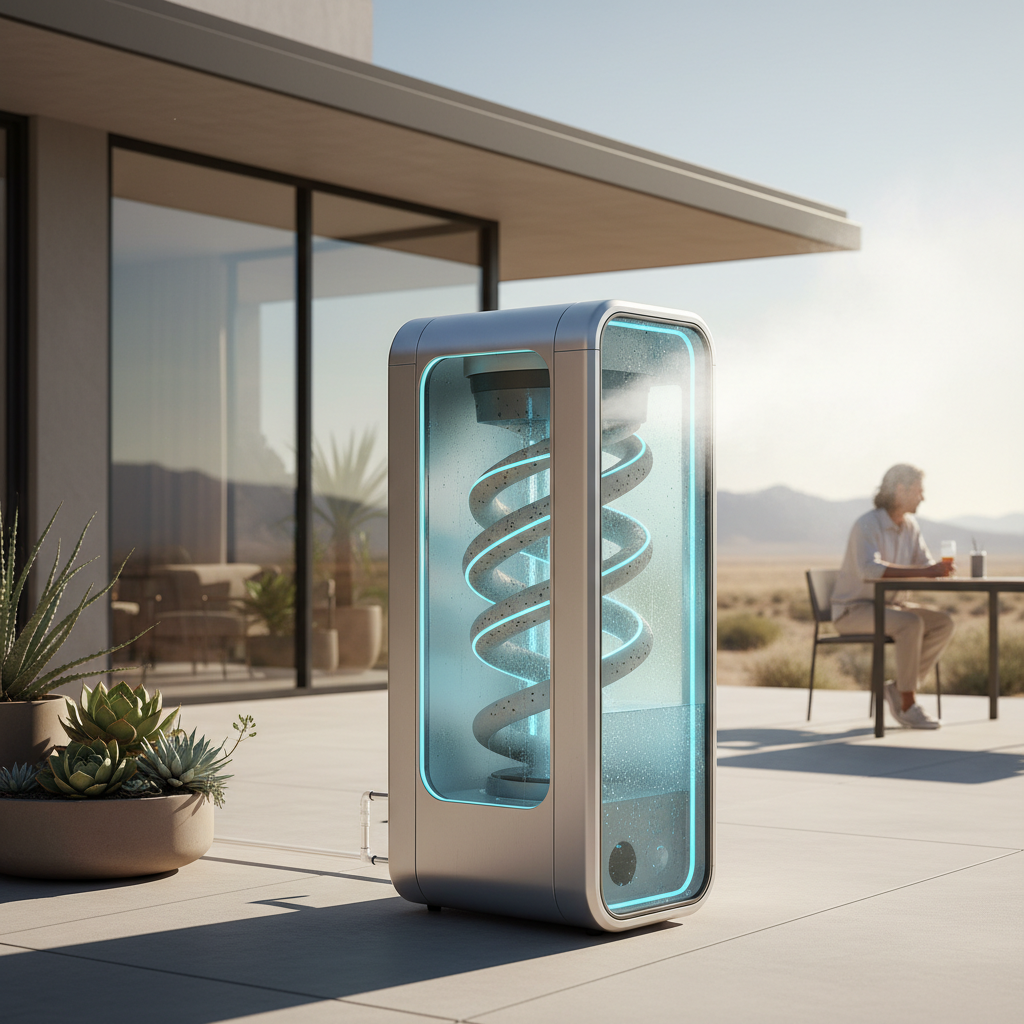
Researchers at the Wyss Institute and Harvard SEAS have developed cSNAP, a biologically inspired, indirect evaporative cooling technology that offers a compelling alternative to traditional air conditioning. Unlike conventional AC, cSNAP uses water instead of harmful refrigerant chemicals and consumes up to 75% less electricity. Its key innovation lies in a multi-chambered ceramic heat exchange unit coated with a proprietary material designed to isolate moisture from the air as it cools. This breakthrough allows for effective temperature reduction without increasing ambient humidity, overcoming a major limitation of traditional evaporative coolers that historically confined their use to dry climates.
The system was tested with a Coefficient of Performance (COP) above 8, a stark contrast to standard AC units which typically achieve a maximum COP of 3.5. A later iteration, Vesma, further integrates novel dehumidification technology, pushing its potential COP to 10. With its low water usage, ceramic material base, and slim, easily retrofitted form factor, cSNAP and Vesma are particularly appealing for low-resource and desert environments, and the team aims to commercialize it for the residential air conditioning market.
MIT’s Passive Cooling System
For off-grid locations and supplemental cooling, MIT researchers have engineered an innovative passive cooling system that minimizes both power and water requirements. This system ingeniously combines radiative cooling, evaporative cooling, and thermal insulation into a slim package that could resemble a solar panel. It operates without electricity and only needs small, infrequent water additions—as little as once a month in wetter areas or every four days in the hottest, driest conditions.
The multi-layered device can achieve approximately 9.3°C (19°F) of cooling below the ambient temperature. It comprises an aerogel top layer, which acts as a highly insulating material while allowing water vapor and infrared radiation to pass through. Below this, a hydrogel layer serves as the water source for evaporation. A mirror-like layer at the bottom reflects incoming sunlight, preventing heat absorption. This synergistic combination allows the system to remain effective even in high-humidity environments where standalone evaporative or radiative cooling typically falters. While currently facing challenges with aerogel production costs, this technology holds immense potential for food preservation—extending safe storage times—and for significantly reducing the load on conventional air conditioning systems by cooling their condensers.
“By combining evaporative cooling, radiative cooling, and insulation, [this system] has a better cooling performance and can be effective in a wider range of climates than evaporative cooling or radiative cooling alone. The work could attract significant practical applications, such as in food preservation, if the system can be made at reasonable cost.” – Xiulin Ruan, Professor of Mechanical Engineering at Purdue University
The Transformative Impact: Benefits of Water-Efficient Cooling
The widespread adoption of water-efficient evaporation technologies promises a multitude of benefits, addressing critical environmental, economic, and performance challenges.
Environmentally, these innovations offer substantial water conservation, freeing up millions of liters of water annually that would otherwise be consumed by traditional cooling systems. By significantly reducing reliance on municipal water sources, they mitigate strain on water-stressed regions. Furthermore, the high energy efficiency of many of these systems translates directly into lower electricity consumption, leading to a reduced carbon footprint and fewer greenhouse gas emissions. Technologies like cSNAP and Vesma also eliminate the need for harmful refrigerant chemicals, offering a truly eco-friendly cooling pathway.
Economically, the lower operating costs associated with reduced energy and water consumption can lead to substantial long-term savings for both businesses and homeowners. While initial investment for some nascent technologies might be higher, the lifecycle cost benefits, particularly in industries like data centers, are compelling, often with payback periods under two years for solutions like ZutaCore’s two-phase liquid cooling.
In terms of performance, these advanced cooling systems provide superior thermal management, particularly vital for high-density computing environments where maintaining precise chip-level temperatures is paramount for optimal operation and longevity. Their design innovations also expand the applicability of evaporative principles, allowing effective cooling in climates previously deemed unsuitable for such technologies.
Finally, the health benefits are notable. Systems that draw in fresh outdoor air, filter it, and avoid harmful refrigerants contribute to better indoor air quality, promoting healthier living and working environments.
Challenges and the Road Ahead
Despite their transformative potential, water-efficient evaporation technologies face hurdles that need to be addressed for widespread adoption. The initial investment cost for some cutting-edge systems, particularly those using advanced materials like aerogels, can be high, posing a barrier to entry. Scalability and mass production of these novel materials and integrated systems remain significant challenges. Further research and development are required to bring down manufacturing costs and streamline production processes.
Another aspect is the education and awareness surrounding these new technologies. Consumers and industries alike need to understand the long-term benefits and operational nuances. For immersion cooling, for instance, data center operators require assurance regarding long-term fluid management and maintenance protocols. Overcoming these challenges will necessitate continued innovation, strategic investments, and collaborative efforts between researchers, industry leaders, and policymakers.
Conclusion
As the world grapples with escalating temperatures and dwindling resources, the demand for sustainable cooling solutions has never been more pressing. The future of cooling lies in embracing innovative water-efficient evaporation technologies that drastically cut water consumption and energy use. From the closed-loop liquid cooling in hyperscale data centers to the climate-agnostic indirect evaporative systems for homes and the virtually waterless passive cooling devices for off-grid applications, these advancements represent a critical pivot towards a more sustainable and resilient future. By prioritizing water conservation, energy efficiency, and environmental responsibility, we can usher in an era where effective cooling no longer comes at the expense of our planet. What steps will you take to support this vital transition towards a cooler, more sustainable tomorrow?
Frequently Asked Questions
What is “zero-water cooling” in the context of evaporative technologies?
“Zero-water cooling” refers to advanced systems that eliminate the continuous consumption of water through evaporation. While they may use water or other coolants initially, these fluids are contained within closed-loop systems and recirculated, meaning no ongoing water is lost to the atmosphere. This contrasts with traditional evaporative coolers that constantly consume water through evaporation.
How are waterless evaporative cooling systems different from traditional air conditioners?
Unlike traditional air conditioners that use chemical refrigerants and vapor compression cycles to cool and dehumidify air (often recirculating stale indoor air), waterless or highly water-efficient evaporative systems utilize the principle of evaporation (or closed-loop fluid circulation) with minimal to no ongoing water consumption. Many also avoid harmful refrigerants, use significantly less electricity, and some even bring in fresh outdoor air.
Can these new water-efficient technologies work in humid climates?
Historically, traditional evaporative coolers were ineffective in humid climates. However, cutting-edge water-efficient technologies like Harvard’s cSNAP/Vesma integrate features such as membrane dehumidification, allowing them to cool effectively without adding humidity. Similarly, MIT’s passive cooling system combines multiple principles to remain potent even in high-humidity environments.
What are the main benefits of water-efficient cooling?
The primary benefits include significant water conservation, drastic reductions in energy consumption (leading to lower electricity bills and carbon footprints), elimination of harmful refrigerants in some systems, improved air quality, and enhanced thermal management for high-density applications like data centers. These innovations offer a path towards more sustainable and environmentally responsible cooling.