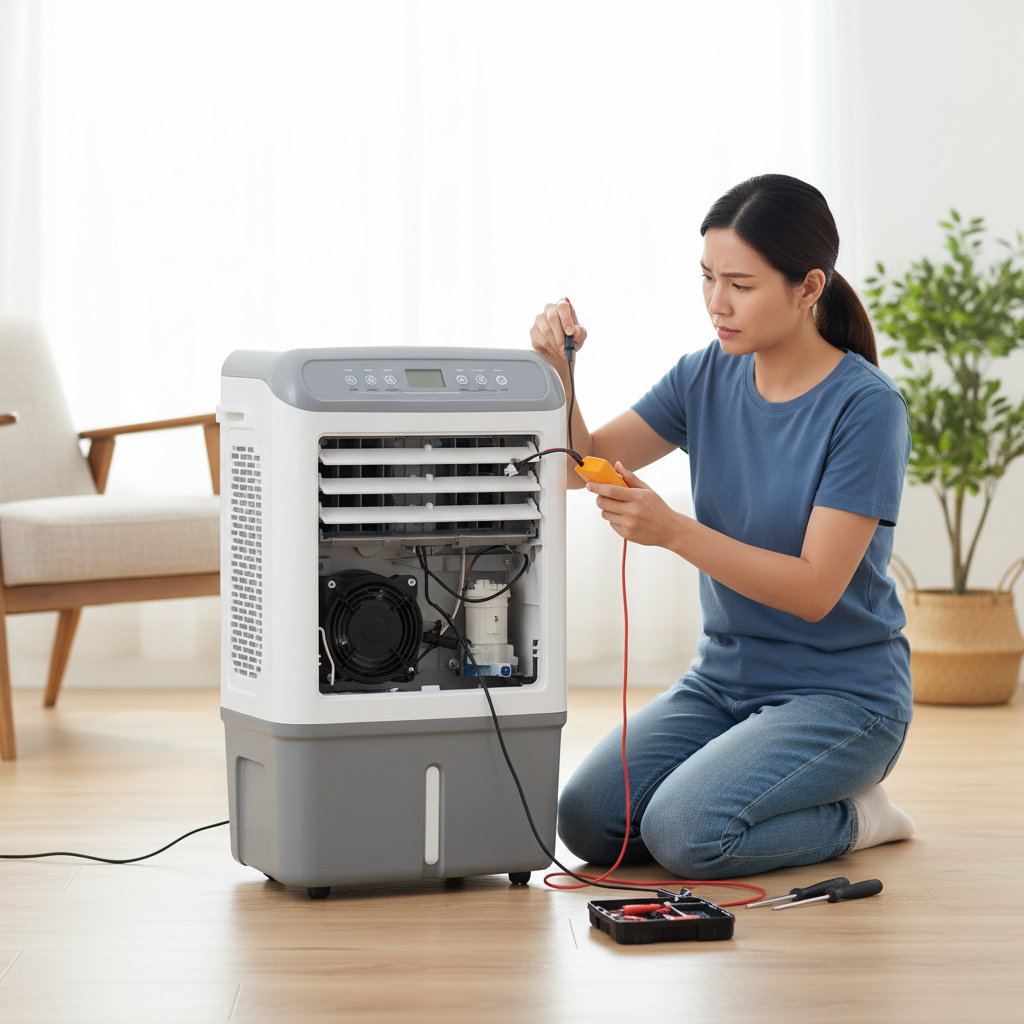
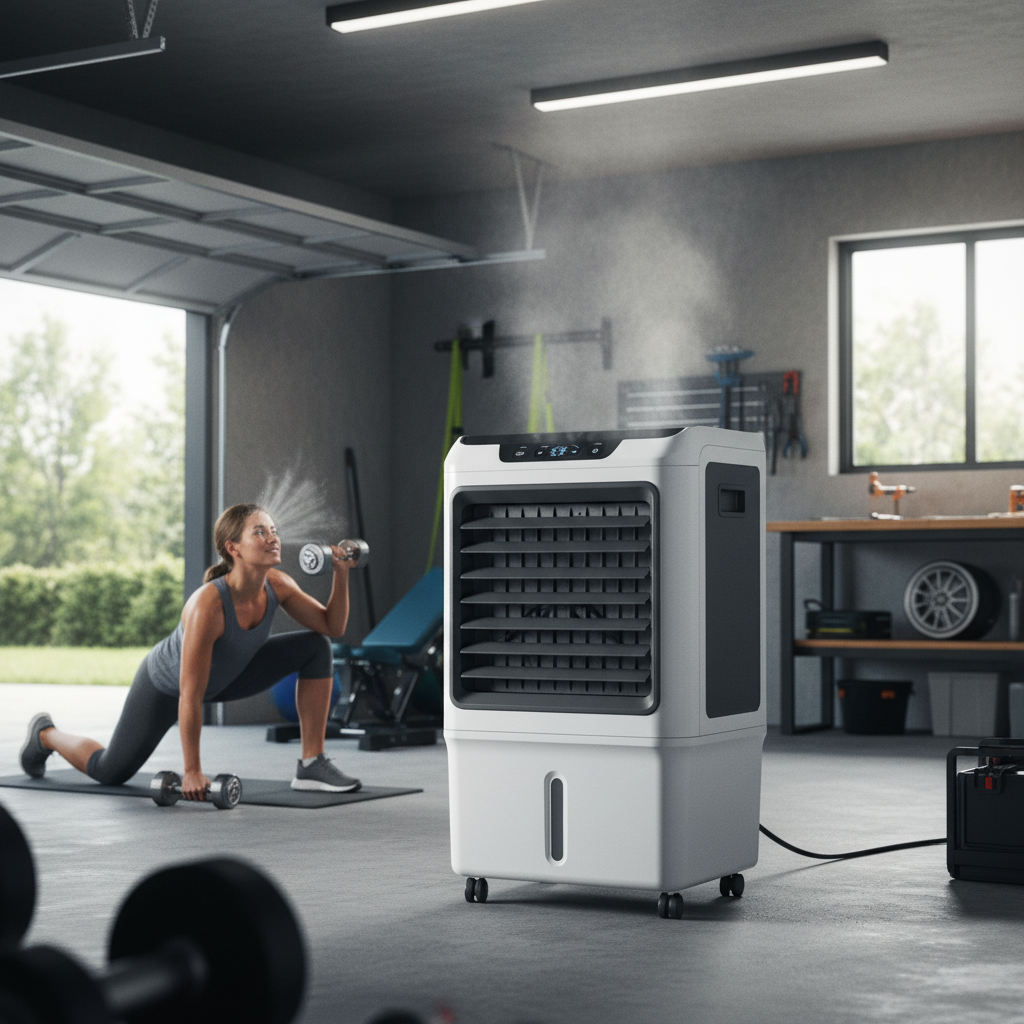
Transforming a scorching garage or a stuffy home gym into a comfortable, productive space can seem like a daunting task, especially when summer temperatures soar. While traditional air conditioning is often considered the go-to, it’s not always the most practical or energy-efficient solution for these often open or semi-enclosed environments. This guide delves into the world of air coolers, specifically evaporative coolers, to help you find the perfect cooling solution tailored for your garage or gym in 2026, balancing performance, cost, and environmental impact.
What is an Evaporative Air Cooler (Swamp Cooler)?
An evaporative air cooler, commonly known as a swamp cooler, is a cooling device that leverages the natural process of water evaporation to lower air temperature. Unlike air conditioners that use chemical refrigerants to cool and recirculate air, evaporative coolers draw in warm, dry ambient air, pass it over water-soaked pads, and then release naturally cooled, moistened air into the space. This process can significantly reduce temperatures by 15 to 20 degrees Fahrenheit in suitable climates.
The fundamental principle is simple: as water evaporates from the pads, it absorbs heat from the air, creating a refreshing breeze. This mechanism makes evaporative coolers an eco-friendly and energy-efficient alternative, especially for open or semi-enclosed areas like garages, workshops, and gyms.
Evaporative Air Coolers vs. Air Conditioners: Key Differences
Understanding the distinctions between evaporative coolers and air conditioners is crucial for making an informed decision, especially for spaces like garages and gyms that have unique environmental demands.
- Operating Principle: Air conditioners use refrigerants to cool air by removing heat and moisture, then recirculate that cooled air within a sealed space. Evaporative coolers, conversely, cool air through water evaporation, introducing fresh, cooled air and slightly increasing humidity.
- Climate Suitability: This is the most critical differentiator. Evaporative coolers excel in hot, dry climates (e.g., Western and Southwestern US) where humidity levels are typically below 50-60%. In such conditions, they can be highly effective. In contrast, they are ineffective and can even make a humid environment more uncomfortable in moist climates (e.g., Midwest or Eastern US), where air conditioners are the superior choice.
- Energy Consumption & Cost: Evaporative coolers are remarkably energy-efficient, consuming significantly less electricity (up to 70-80% less) compared to traditional AC compressors because they primarily use a fan and a water pump. This translates to lower operating costs—potentially saving thousands annually for larger spaces. Their initial purchase price is also generally 30-50% less than AC systems.
- Air Quality & Freshness: Evaporative coolers continuously draw in fresh outdoor air, preventing stale air buildup and mitigating odors often found in active spaces like gyms. Air conditioners, by recycling indoor air, can sometimes lead to stuffiness, though they do dehumidify the air.
- Installation & Portability: Many evaporative coolers are portable units, requiring minimal to no installation. Air conditioners, especially mini-splits or window units, often require more complex setup or permanent modifications.
|
Our Picks for the Best Air cooler in 2026
As an Amazon Associate I earn from qualifying purchases.
|
||
| Num | Product | Action |
|---|---|---|
| 1 | Portable Air Conditioners, 3-IN-1 Evaporative Air Cooler,Cooling Fans that Blow Cold Air with 60° Oscillation,9H Timer,3 Modes & 12 Speeds, 8 Ice Packs, Windowless Portable AC for Room,Bedroom,Office |

|
| 2 | 3-in-1 Portable Evaporative Air Cooler - 2000 CFM Swamp Cooler with 6.6-Gal Dual Tank & 4 Ice Packs, Remote Control, 12H Timer, Oscillating Cooling Fan for Large Room, Office, Mother's Day |
|
| 3 | LEVOIT Tower Fan for Bedroom, 90° Oscillating Standing Fan with 28dB Quiet for Sleep, 25ft/s Velocity, 12H Timer, 5 Speeds 4 Modes, Remoter, Bladeless Room Fan for Home, Office, Indoor, 36 inch, White |
|
| 4 | Evaporative Air Cooler - Swamp Cooler with 3L Water Tank, 3 Modes & 3 Speeds, Remote Control, 12H Timer, 50° Oscillating Portable Bladeless Cooling Tower Fan For Room Bedroom Office Mother's Day |
|
| 5 | DREO Evaporative Air Swamp Cooler, 43" Cooling Fans that Blow Cold Air 2026 Upgraded, 80° Oscillating Floor Fan for Bedroom, Easy Cleaning, APP Control, Ice Packs, 4 Speeds & 4 Modes, 12H Timer, White |
|
| 6 | Arctic Air Pure Chill 2.0 Evaporative Air Cooler by Ontel - Powerful, Quiet, Lightweight and Portable Space Cooler with Hydro-Chill Technology For Bedroom, Office, Living Room & More,Blue |
|
| 7 | DREO Tower Fan for Bedroom, 2026 Upgraded DC Motor, 28ft/s High Velocity, 20dB Ultra Quiet Standing Fan, 8 Speeds 4 Modes, 90° Oscillating Bladeless Fan for Indoors, Floor Fans with Remote, Black |
|
| 8 | Midea 5,000 BTU EasyCool Small Window Air Conditioner - Cool up to 150 Sq. Ft. with Easy-to-Use Mechanical Controls and Reusable Filter, Perfect for Small Bedroom, Living Room, Home Office |
|
| 9 | DREO Tower Fan for Bedroom, 43" Cooling Fans That Blow Cold Air 2026 Upgraded, Evaporative Air Cooler, Quiet 80° Oscillating Floor Fan, Easy Cleaning, APP Control, 4 Modes & 4 Speeds, 12H Timer, Black |
|
| 10 | Portable Air Conditioners, Swamp Cooler Portable AC Unit for Room, Windowless Cooling Fan That Blow Cold Air w/Remote 5L Tank 12 Speeds 9H Timer, Evaporative Air Cooler for Bedroom Garage (White) |
|
Advantages and Disadvantages of Evaporative Air Coolers
Choosing an evaporative cooler means weighing its benefits against its limitations, particularly in the context of garages and gyms.
Advantages:
- Energy Efficiency: Significantly lower electricity usage leads to substantial savings on utility bills.
- Eco-Friendly: They don’t use chemical refrigerants like Freon, reducing their environmental impact.
- Improved Air Quality: Constant intake of fresh air helps reduce odors and airborne pollutants, creating a healthier breathing environment.
- Cost-Effective: Generally more affordable to purchase and install than AC units.
- Moisture Addition: In dry climates, they add beneficial moisture to the air, which can be comfortable and prevent dryness.
- Versatility: Many models are portable and suitable for both indoor (with proper ventilation) and outdoor or semi-enclosed spaces.
Disadvantages:
- Humidity Limitation: Their effectiveness drastically drops in humid climates, where they can make the air feel muggy.
- Requires Ventilation: To prevent humidity buildup, evaporative coolers require open windows or doors to allow hot, moist air to escape.
- Water Refills: Manual fill models require regular water refills, though continuous fill options solve this.
- Maintenance: Regular cleaning of the water reservoir and cooling pads is necessary to prevent mold, mildew, and bacteria growth.
- Less Precise Temperature Control: Unlike AC, they don’t offer precise thermostat-controlled temperature settings.
Guide to Selecting the Right Air Cooler for Your Garage or Gym
Selecting the ideal air cooler involves more than just picking the most powerful unit; it requires a thoughtful assessment of your space, climate, and specific needs.
Determine Your Usage Needs
Before diving into technical specifications, consider how you’ll use the cooler:
- Room Size: Measure the square footage of your garage or gym. This is paramount for determining the necessary cooling capacity.
- Purpose: Is it a workshop where you’ll be generating heat, a gym for intense workouts, or a casual recreation space? High activity levels will demand more robust cooling.
- Budget: Establish a realistic budget for both the unit and its ongoing operating costs. Evaporative coolers offer a lower entry and running cost compared to AC.
- Climate: As emphasized, your local humidity levels are the single most important factor in deciding if an evaporative cooler is right for you. If you live in a dry region with low humidity, an evaporative cooler is an excellent, cost-effective choice. For humid climates, you might need to explore portable air conditioners or supplement an evaporative cooler with ice in the water tank.
Key Technical Factors to Consider
Once your needs are clear, focus on these specifications:
- Cooling Capacity (CFM): For evaporative coolers, capacity is measured in Cubic Feet per Minute (CFM), indicating the volume of air the unit can process. A general guideline is to have 2 CFM per square foot for garages or gyms, potentially oversizing slightly for spaces with poor insulation or high heat loads. For instance, a 500 sq ft space might need around 1000 CFM.
“When choosing an evaporative cooler, it’s important to consider the size of the room you’ll be using it in. Smaller rooms can be effectively cooled with compact, portable units, while larger spaces or outdoor areas require more powerful models with higher airflow rates.” – Paul Oslam, HVAC Account Manager, Home Alliance
- Water Tank Capacity & Refill Options: Larger tanks (e.g., 10-15 gallons) offer longer operation between refills. Many modern evaporative coolers also feature a continuous fill option, allowing you to connect a garden hose for uninterrupted cooling, ideal for a more permanent setup in a garage or large gym.
- Airflow and Oscillation: Look for adjustable fan speeds and oscillating louvers that help distribute cool air evenly across the space. This is particularly beneficial in larger, open environments.
- Noise Level: For a gym where focus is key, or a garage where you might be working for extended periods, a quieter unit (measured in decibels, dB) is highly desirable.
- Durability and Construction: Garages and gyms can be demanding environments. Look for robust construction, such as UV-resistant polypropylene, if the unit will be exposed to sunlight or harsh conditions.
- Portability: Wheels/casters and sturdy handles are essential if you plan to move the cooler frequently between different areas of your garage or even to outdoor spaces.
- Additional Features: Remote controls, programmable timers, low water alarms, and multiple fan modes (e.g., normal, sleep, natural breeze) enhance convenience and user experience.
The Role of Insulation and Ventilation
For optimal performance of any cooling system in a garage, proper insulation and ventilation are critical. A well-insulated garage will retain cool air more effectively, reducing the workload on your cooler. Similarly, adequate ventilation (e.g., slightly open windows or doors) is essential for evaporative coolers to function efficiently by allowing hot, stale air to exit and fresh air to enter. Without proper ventilation, an evaporative cooler can increase indoor humidity without sufficient cooling.
Top Air Coolers for Garages and Gyms in 2026
Based on performance, features, and suitability for garage and gym environments, here are some of the best evaporative air coolers to consider for 2026. These models are particularly effective in dry, hot climates.
Best Overall for Versatility: Hessaire MC37M Evaporative Cooler
The Hessaire MC37M is a consistently top-rated choice for its balance of power, portability, and features.
- Key Features: Boasting 3,100 CFM airflow and covering up to 950 sq ft, it’s suitable for medium to large garages and gym zones. It features a 10.3-gallon water tank for up to four hours of cooling, with an option to connect a garden hose for continuous fill. Its durable, UV-resistant polypropylene construction makes it suitable for both indoor and outdoor use.
- Pros: Powerful, versatile for various spaces, continuous fill option, robust build, relatively easy to move on casters.
- Cons: Can be heavy for frequent repositioning (39 lbs).
Best for Small to Medium Spaces: Hessaire MC18M Portable Evaporative Cooler
For smaller garages, personal gym nooks, or workshops up to 500 sq ft, the Hessaire MC18M offers efficient cooling in a more compact and lightweight design.
- Key Features: It provides 1,300 CFM airflow and comes with a 4.8-gallon tank. Like its larger counterpart, it offers both manual and continuous fill options. Its lightweight design (16 lbs) and integrated handle make it highly portable.
- Pros: Excellent portability, simple operation, effective for its size, energy-efficient.
- Cons: Limited coverage for very large spaces.
Best for Large Spaces and Commercial Use: Hessaire MC61M Evaporative Cooler
When you need serious cooling power for expansive garage gyms or larger workshops, the Hessaire MC61M steps up.
- Key Features: Delivering a robust 5,300 CFM, this model can cool up to 1,600 sq ft. It incorporates a three-panel intake system for maximum air intake and a 14.6-gallon water tank with a continuous fill option. Raised controls and oscillating louvers add to its user-friendly design.
- Pros: High capacity, rapid cooling for large areas, continuous fill, durable.
- Cons: Larger and heavier (56 lbs), making it less ideal for frequent relocation.
Premium Option for Extra-Large Areas: Big Ass Fans Cool-Space 350 Evaporative Swamp Cooler
For those with substantial spaces and a higher budget, Big Ass Fans offers industrial-grade cooling.
- Key Features: Capable of cooling up to 2,300 sq ft with an airflow of 3,400 CFM. It features a large 50-gallon water tank for extended operation (up to 10 hours) or a continuous fill option. Variable speed control and locking swivel casters provide flexibility. Some models offer Wi-Fi connectivity for app control.
- Pros: Exceptional cooling power for very large spaces, robust construction, long run time on a single fill.
- Cons: Significantly more expensive, heavier (160 lbs), potentially cumbersome for some users.
Compact and Tower-Style: Honeywell TC30PEU Portable Evaporative Air Cooler
For smaller, tighter spaces or when a sleek, space-saving design is preferred, Honeywell offers a practical solution.
- Key Features: This tower-style cooler is designed for spaces up to 280 sq ft and features a 7.9-gallon water tank. It’s highly portable (19.6 lbs) with rolling casters and includes a remote control for convenience.
- Pros: Space-saving design, good portability, remote control, quiet operation.
- Cons: Limited cooling coverage compared to larger units.
Comparison Table of Air Cooler Models (Typical Specifications)
| Tiêu chí | Hessaire MC18M | Hessaire MC37M | Hessaire MC61M | Big Ass Fans Cool-Space 350 | Honeywell TC30PEU |
|---|---|---|---|---|---|
| Công suất (CFM) | 1,300 | 3,100 | 5,300 | 3,400 | ~280-470 |
| Lưu lượng gió (sq ft) | 500 | 950 | 1,600 | 2,300 | 215-280 |
| Dung tích bình chứa nước (gallons) | 4.8 | 10.3 | 14.6 | 50 | 7.9 |
| Độ ồn (approx. dB) | Moderate | Moderate | Moderate | Varies | Low |
| Tính năng bổ sung | Manual/Continuous fill, 3 speeds | Manual/Continuous fill, UV-resistant casing, 3 speeds | Manual/Continuous fill, 3-panel intake, oscillating louvers, raised controls | Manual/Continuous fill, variable speed, locking casters, Wi-Fi option | Tower design, remote control, 3 wind modes, oscillation |
| Giá (approx.) | $190 – $270 | $380 – $530 | $580 – $770 | $2,900 – $3,400 | $220 – $280 |
Note: Prices are approximate and can vary based on retailer and ongoing sales.
How to Use and Maintain Your Air Cooler Correctly
Proper usage and regular maintenance are vital for maximizing the efficiency and lifespan of your evaporative air cooler, especially in demanding environments like garages and gyms.
Installation and Operation
- Placement: Position your evaporative cooler near an open window or door to draw in fresh, dry air. Crucially, ensure another window or door is open on the opposite side of the room to create cross-ventilation, allowing hot, humid air to escape. This prevents humidity buildup and ensures effective cooling.
- Water Source: Fill the water tank with clean, fresh water. If your model has a continuous fill option, connect it to a garden hose for hassle-free operation, especially for long cooling sessions.
- Power On: Turn on the unit and select your desired fan speed and cooling mode. Some models offer oscillation to distribute air more widely.
Regular Cleaning and Maintenance
Evaporative coolers operate by passing air through water-saturated pads, which can become breeding grounds for mold, mildew, and bacteria if not regularly cleaned.
- Daily Checks: Monitor the water level and refill as needed.
- Weekly Cleaning (or more frequently with heavy use): Empty and clean the water tank to prevent stagnant water and algae growth. Wipe down exterior surfaces.
- Monthly Cleaning: Remove and clean the cooling pads according to the manufacturer’s instructions. This usually involves rinsing them with water. Inspect them for any signs of wear or damage.
- Seasonal Maintenance: Before storing the unit for the off-season, thoroughly clean and dry all components, especially the water tank and cooling pads, to prevent mold and mildew during storage. Replace cooling pads annually or as recommended by the manufacturer.
- Troubleshooting: Consult your owner’s manual for common issues like reduced airflow or unusual odors. Many problems can be resolved with simple cleaning or by ensuring proper ventilation.
Important Considerations When Using an Air Cooler
To ensure the best experience and effectiveness from your air cooler, keep these points in mind:
- Never Use in a Sealed Room (for Evaporative Coolers): Unlike AC, evaporative coolers require an exchange of air. Using them in a completely closed room will lead to a rapid increase in humidity, making the space feel muggy and uncomfortable, rather than cool. Always provide adequate ventilation.
- Water Quality Matters: Use clean water to prevent mineral buildup on the pads and reduce the risk of mold or bacterial growth. Hard water areas might require more frequent cleaning or specific water treatments.
- Insulation is Key for Garages: A garage with poor insulation will significantly reduce the efficiency of any cooling device. Consider insulating garage doors, walls, and ceilings to maximize the cooling effect and save energy. This is a foundational step before investing in a cooler.
- Humidity Control: In climates with fluctuating humidity, be mindful of how the cooler performs. On days with higher humidity, the cooling effect will be diminished. Adding ice to the water tank can provide an extra boost of cooling in these situations.
Conclusion
Creating a comfortable garage workshop or a refreshing home gym doesn’t have to be a costly or complex endeavor. For those in hot, dry climates, an evaporative air cooler presents an energy-efficient, eco-friendly, and highly effective solution. Models from trusted brands like Hessaire, Portacool, and Big Ass Fans offer a range of capacities and features to suit various needs and spaces in 2026, from compact personal coolers to powerful industrial units.
By understanding the distinct advantages of evaporative coolers over traditional air conditioning for these open environments, and by carefully considering factors like climate, space size, and maintenance, you can select an air cooler that ensures a cooler, more enjoyable workout or work session. With proper placement, regular cleaning, and adequate ventilation, your garage or gym can become a truly comfortable space all year round.
Are you ready to transform your overheated garage or gym into a cool oasis for peak performance and productivity?
Frequently Asked Questions
How much energy do evaporative air coolers save compared to AC?
Evaporative air coolers can save 70-80% more energy than traditional air conditioners because they operate with just a fan and water pump, avoiding the high power consumption of AC compressors. This translates to significant annual savings on electricity bills.
Can I use an evaporative cooler in a humid climate?
Evaporative coolers perform best in hot, dry climates where humidity levels are low (ideally below 50-60%). In humid climates, they are largely ineffective and can even increase the mugginess in a space, making it less comfortable. For humid regions, portable air conditioners are generally a better choice.
How often do I need to refill the water tank?
The frequency of water tank refills depends on the tank’s capacity and the operating conditions (fan speed, humidity). Smaller tanks might need refilling every few hours, while larger tanks can run for 4-10 hours. Many models also offer a continuous fill option, allowing connection to a garden hose for uninterrupted operation.
Is a portable air cooler enough to cool a large garage?
For a large garage, a high-capacity evaporative cooler (typically 3,000 CFM or more) is necessary. However, its effectiveness is greatly enhanced by good insulation and proper ventilation. Without these, even powerful units may struggle to cool a very large, unsealed space effectively.
What maintenance is required for an evaporative air cooler?
Regular maintenance for an evaporative cooler includes weekly cleaning of the water tank, monthly cleaning or rinsing of the cooling pads, and thorough cleaning before seasonal storage. Cooling pads should typically be replaced annually or as recommended by the manufacturer to prevent mold and ensure optimal performance.