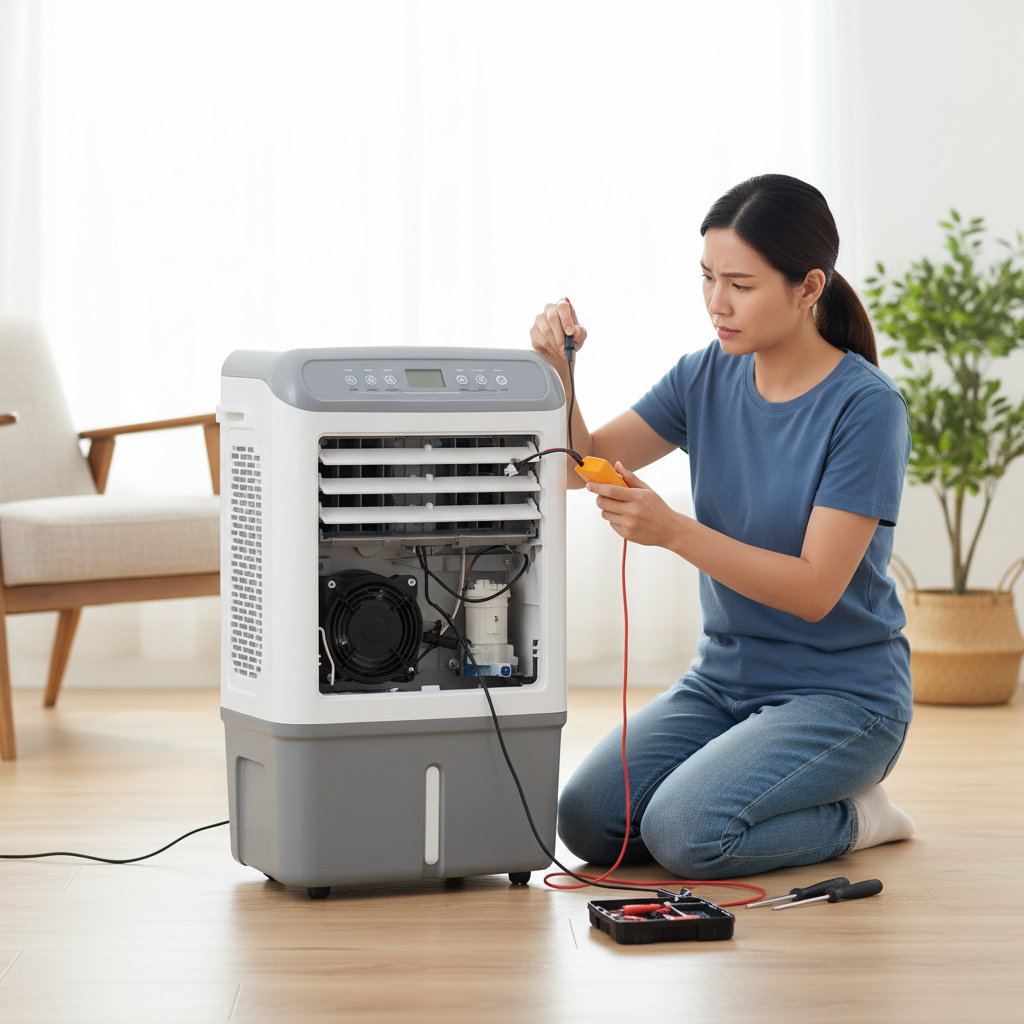
Keeping cool during scorching summers or in dry climates can be a constant challenge. While traditional air conditioners offer powerful cooling, they often come with high energy bills and complex installations. Enter the air cooler, a more energy-efficient and eco-friendly alternative. For those seeking maximum convenience and continuous comfort without the hassle of frequent refills, air coolers equipped with an auto-fill water function are a game-changer. This guide will delve into what makes these innovative cooling solutions stand out, how to choose the right one for your home, and why they might be the perfect addition to your cooling arsenal.
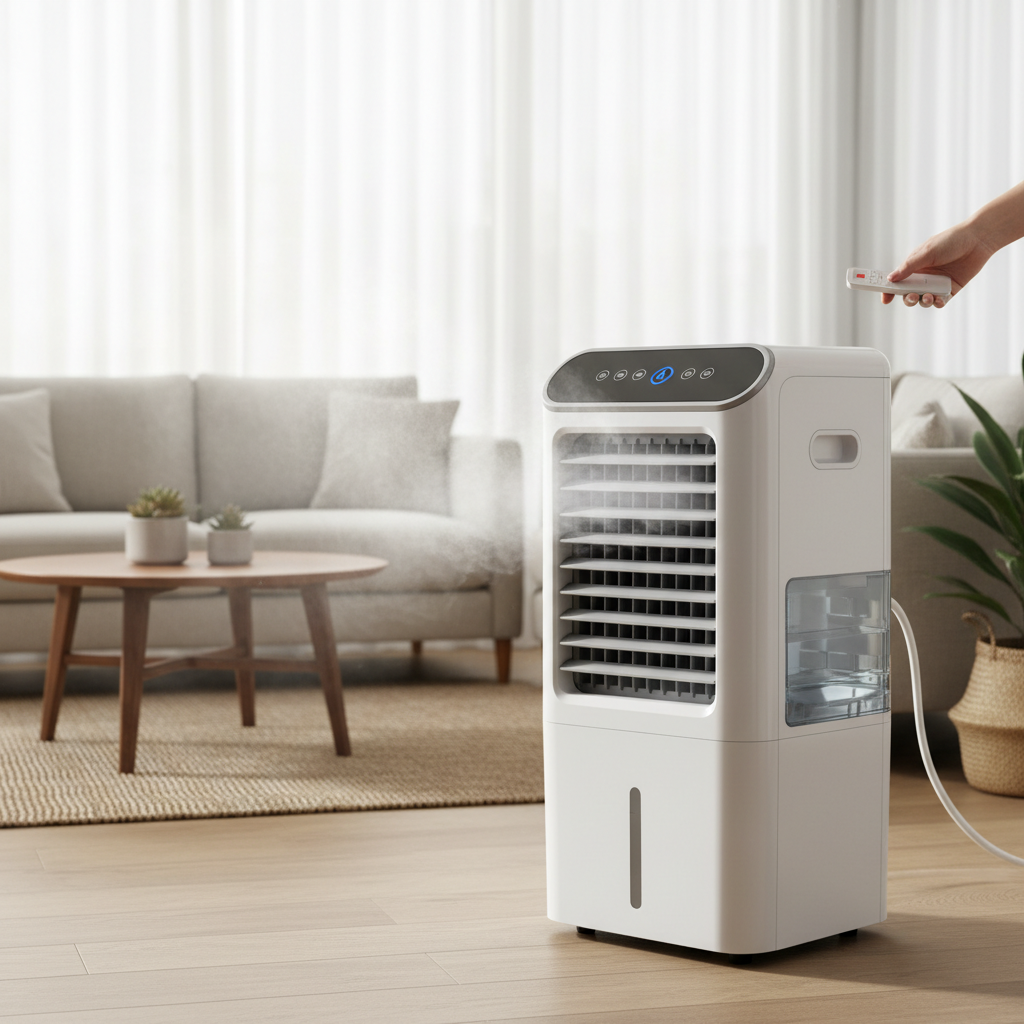
What Are Air Coolers (Evaporative Coolers)?
An air cooler, also known as an evaporative cooler or swamp cooler, operates on the natural principle of evaporation to reduce ambient air temperature. Unlike air conditioners that use refrigerants and compressors, air coolers draw in hot, dry air and pass it over water-soaked pads. As water evaporates from these pads, it absorbs heat from the air, resulting in a cooler, more humid breeze being circulated into your space. This method is not only simpler but also significantly more energy-efficient and environmentally friendly, as it avoids harmful chemical refrigerants.
The primary components of an air cooler include a water tank, cooling pads, a pump to keep the pads wet, and a fan to circulate air. This natural process makes them a popular choice for those seeking a cost-effective and green cooling solution, particularly in dry climates where the added humidity can be a welcome benefit.
Air Coolers vs. Air Conditioners: Key Differences
Understanding the distinction between air coolers and air conditioners is crucial for making an informed choice.
- Cooling Mechanism: Air coolers use water evaporation, while air conditioners use refrigerants and a compressor cycle.
- Energy Consumption: Air coolers consume significantly less electricity, leading to lower energy bills and a reduced environmental footprint.
- Climate Suitability: Air coolers thrive in dry, arid conditions, as their efficiency decreases dramatically in highly humid environments (typically above 60% relative humidity). Air conditioners, conversely, perform well in all climates.
- Installation: Most air coolers are portable and require minimal to no installation. Air conditioners often need professional installation and venting.
- Air Quality: Air coolers add moisture to dry air and can filter dust, potentially improving indoor air quality in arid regions.
|
Our Picks for the Best Air cooler in 2026
As an Amazon Associate I earn from qualifying purchases.
|
||
| Num | Product | Action |
|---|---|---|
| 1 | Portable Air Conditioners, Swamp Cooler Portable AC Unit for Room, Windowless Cooling Fan That Blow Cold Air w/Remote 5L Tank 12 Speeds 9H Timer, Evaporative Air Cooler for Bedroom Garage (White) |

|
| 2 | 3-in-1 Portable Evaporative Air Cooler - 2000 CFM Swamp Cooler with 6.6-Gal Dual Tank & 4 Ice Packs, Remote Control, 12H Timer, Oscillating Cooling Fan for Large Room, Office, Mother's Day |
|
| 3 | DREO Tower Fan for Bedroom, 43" Cooling Fans That Blow Cold Air 2026 Upgraded, Evaporative Air Cooler, Quiet 80° Oscillating Floor Fan, Easy Cleaning, APP Control, 4 Modes & 4 Speeds, 12H Timer, Black |
|
| 4 | Arctic Air Pure Chill 2.0 Evaporative Air Cooler by Ontel - Powerful, Quiet, Lightweight and Portable Space Cooler with Hydro-Chill Technology For Bedroom, Office, Living Room & More,Blue |
|
| 5 | DREO Evaporative Air Swamp Cooler, 43" Cooling Fans that Blow Cold Air 2026 Upgraded, 80° Oscillating Floor Fan for Bedroom, Easy Cleaning, APP Control, Ice Packs, 4 Speeds & 4 Modes, 12H Timer, White |
|
| 6 | Midea 5,000 BTU EasyCool Small Window Air Conditioner - Cool up to 150 Sq. Ft. with Easy-to-Use Mechanical Controls and Reusable Filter, Perfect for Small Bedroom, Living Room, Home Office |
|
| 7 | Portable Air Conditioners, 3-IN-1 Evaporative Air Cooler,Cooling Fans that Blow Cold Air with 60° Oscillation,9H Timer,3 Modes & 12 Speeds, 8 Ice Packs, Windowless Portable AC for Room,Bedroom,Office |
|
| 8 | Evaporative Air Cooler - Swamp Cooler with 3L Water Tank, 3 Modes & 3 Speeds, Remote Control, 12H Timer, 50° Oscillating Portable Bladeless Cooling Tower Fan For Room Bedroom Office Mother's Day |
|
| 9 | DREO Tower Fan for Bedroom, 2026 Upgraded DC Motor, 28ft/s High Velocity, 20dB Ultra Quiet Standing Fan, 8 Speeds 4 Modes, 90° Oscillating Bladeless Fan for Indoors, Floor Fans with Remote, Black |
|
| 10 | LEVOIT Tower Fan for Bedroom, 90° Oscillating Standing Fan with 28dB Quiet for Sleep, 25ft/s Velocity, 12H Timer, 5 Speeds 4 Modes, Remoter, Bladeless Room Fan for Home, Office, Indoor, 36 inch, White |
|
Advantages and Disadvantages of Air Coolers
Advantages:
- Energy Efficient: Uses less electricity compared to ACs, resulting in lower operating costs.
- Eco-Friendly: Does not use harmful refrigerants, making it a greener cooling option.
- Cost-Effective: Generally more affordable to purchase and run than air conditioners.
- Humidifying Effect: Adds moisture to the air, which can be beneficial in dry climates and help alleviate dry skin and respiratory discomfort.
- Portability: Most models are lightweight and easy to move between rooms or even outdoors.
- Improved Air Quality: Acts as a natural air filter, trapping dust and pollen as air passes through wet pads.
Disadvantages:
- Limited Effectiveness in Humid Climates: Their cooling power significantly diminishes as humidity rises, potentially making the air feel muggy.
- Water Refills: Traditional models require regular manual refilling of the water tank. This is where auto-fill models shine.
- Maintenance: Requires periodic cleaning of water tanks and cooling pads to prevent mold, mildew, and mineral buildup.
- Noise Level: Fans can be somewhat noisy, which might be a concern in quiet environments like bedrooms.
- Cooling Power: Does not achieve the same low temperatures as an air conditioner.
The Game Changer: Auto-Fill Water Function Explained
The auto-fill water function is a premium feature that elevates the convenience of an air cooler to an entirely new level. It eliminates the need for manual water refills, allowing your unit to operate continuously for extended periods without interruption. This innovation transforms the user experience from periodic maintenance to true “set it and forget it” cooling.
What is Auto-Fill and How Does It Work?
An air cooler with an auto-fill water function typically includes a connection port, often compatible with a standard garden hose or a direct plumbing line. Inside the unit, a float valve mechanism monitors the water level in the tank. When the water level drops below a certain point due to evaporation, the float valve opens, allowing fresh water to flow in automatically from the connected source until the optimal level is restored. This ensures a continuous supply of water to the cooling pads, guaranteeing uninterrupted cooling performance.
Benefits of Auto-Fill Water Function
The advantages of an auto-fill system are clear for anyone seeking hassle-free operation:
- Uninterrupted Cooling: Enjoy continuous cooling without the need to constantly monitor and refill the water tank, especially beneficial for long operating hours or overnight use.
- Ultimate Convenience: Say goodbye to carrying heavy water buckets and messy spills. The auto-fill feature streamlines maintenance, making it incredibly user-friendly.
- Ideal for Large Spaces or Outdoor Use: For cooling patios, garages, workshops, or larger indoor areas, a continuous water supply ensures consistent performance without constant attention.
- Enhanced Efficiency: Maintaining a consistent water level helps the cooler operate at its peak evaporative efficiency more reliably.
Considerations for Auto-Fill Functionality
While highly beneficial, keep these points in mind:
- Water Source: You’ll need access to a suitable water tap or plumbing connection near where the cooler will be placed.
- Hose Management: Ensure proper routing and secure connection of the water hose to prevent tripping hazards or leaks.
- Water Pressure: Most units are designed for standard household water pressure, but it’s good to check manufacturer specifications.
How to Choose the Perfect Auto-Fill Air Cooler
Selecting the best air cooler with an auto-fill function involves evaluating several factors to ensure it meets your specific needs and provides optimal comfort.
Determine Your Usage Needs
- Room Size (Coverage Area): This is paramount. Look for the unit’s CFM (Cubic Feet per Minute) rating and its recommended coverage area in square feet. A higher CFM indicates a more powerful airflow capable of cooling larger spaces. For example, a Hessaire MC37M is noted for covering up to 950 sq ft, while an MC61M can cool 1,600 sq ft.
- Indoor vs. Outdoor Use: Some models are designed for both, offering durable construction and powerful airflow suitable for open-air environments. Others are better suited for indoor spaces. An auto-fill feature is especially useful outdoors where manual refills might be less convenient.
- Climate (Humidity Levels): Remember, air coolers perform best in dry climates. If your local humidity regularly exceeds 60%, an air cooler, even with auto-fill, might not be the most effective solution.
Key Technical Specifications to Consider
- Cooling Power (CFM): As mentioned, higher CFM means greater cooling capacity. Match this to your room size.
- Water Tank Capacity: Even with auto-fill, a larger tank can act as a buffer or allow for longer operation if the continuous supply is temporarily disconnected.
- Noise Level (dB): If you plan to use the cooler in a bedroom or office, a quieter model is essential. Check the decibel (dB) rating; lower numbers indicate quieter operation. Some Hessaire models are noted for being quieter than average.
- Fan Speeds and Modes: Multiple fan speeds (e.g., low, medium, high) and operating modes (e.g., sleep, natural) offer greater control over comfort.
- Control Options: Look for user-friendly controls, including a remote control for convenience, digital displays, and potentially smart features for app control and scheduling.
Reputable Brands to Consider
Several brands are well-regarded for their evaporative coolers, some of which offer continuous fill options:
- Hessaire: Frequently cited for robust and effective evaporative coolers, with models like the MC37M and MC61M specifically mentioned for continuous fill capability. They are known for powerful airflow and durable designs suitable for both indoor and outdoor use.
- Honeywell: Offers a range of portable evaporative coolers, with some featuring large tank capacities and reliable performance.
- Big Ass Fans: Known for larger, high-performance industrial and commercial evaporative coolers that often include continuous fill options for extensive cooling areas.
Additional Features to Look For
- Portability: Wheels or casters are essential for easily moving the unit.
- Oscillation: Wide-angle oscillation helps distribute cool air more evenly across a room.
- Timer Function: Allows you to set the cooler to turn on or off at specific times, saving energy and providing convenience.
- Air Purification/Filtration: Some models include additional filters to capture more dust and allergens, improving air quality.
Top Air Coolers with Auto-Fill Water Function
While specific model availability and features can vary, several evaporative coolers are consistently praised for their performance and often offer auto-fill or continuous water supply options, particularly from brands like Hessaire.
Hessaire MC37M Evaporative Cooler: This model is a popular choice for its blend of power and convenience. It boasts an impressive airflow suitable for up to 950 square feet and features a 10.3-gallon water tank that can operate for several hours. Crucially, it includes the option to connect to a garden hose for a continuous water supply, making it ideal for extended use without manual refills. Users appreciate its sturdy build, ease of movement, and relatively quiet operation.
Hessaire MC61M Evaporative Cooler: For even larger spaces, the Hessaire MC61M is a robust option, capable of cooling up to 1,600 square feet. It features a three-panel intake system for maximum air intake and accelerated cooling. Like its smaller counterparts, the MC61M offers a continuous fill option, making it a powerful and low-maintenance solution for expansive indoor or outdoor areas.
Hessaire MC18M Evaporative Cooler: This smaller, more portable unit is excellent for areas up to 500 square feet. It’s lightweight and easy to move, making it perfect for offices, garages, or small patios. It also includes the option to connect to a hose for continuous water flow, a significant advantage for a compact model.
These models exemplify the benefits of auto-fill, providing reliable, continuous cooling. While not all models from every brand explicitly advertise “auto-fill” as a primary feature for consumers, many high-capacity evaporative coolers are designed with continuous water input capabilities for maximum uptime.
| Criterion | Hessaire MC37M | Hessaire MC61M | Hessaire MC18M |
|---|---|---|---|
| Coverage Area | Up to 950 sq ft | Up to 1,600 sq ft | Up to 500 sq ft |
| Airflow (CFM) | 3,100 CFM | Higher (not specified but implied by coverage) | 1,300 CFM |
| Water Tank Capacity | 10.3 Gallons | Large (not specified) | 4.8 Gallons |
| Continuous Fill | Yes (Hose connection) | Yes (Hose connection) | Yes (Hose connection) |
| Portability | Easy to move with casters | Large, but on wheels | Lightweight, very portable |
| Typical Use | Medium to large rooms, outdoor patios | Large rooms, workshops, large outdoor areas | Small rooms, offices, garages, personal cooling |
Using and Maintaining Your Auto-Fill Air Cooler Correctly
Proper usage and regular maintenance are vital to ensure your auto-fill air cooler performs efficiently and has a long lifespan.
Installation and Operation
- Placement: Position your air cooler near an open window or door to allow fresh air intake, which is essential for effective evaporative cooling. Avoid placing it in fully enclosed spaces, as this can increase humidity without sufficient cooling.
- Water Connection: Securely connect a standard garden hose to the cooler’s auto-fill inlet. Ensure the hose is free of kinks and leaks.
- Initial Fill: Allow the tank to fill automatically. Once the water level is stable, you can power on the unit.
- Ventilation: Always ensure there is an exhaust path for the humidified air. Opening a window on the opposite side of the room helps circulate air and prevents excessive humidity buildup.
Cleaning and Regular Maintenance
Regular cleaning is crucial for preventing mold, mildew, and mineral deposits, which can affect performance and air quality.
- Drain and Clean Tank: Even with auto-fill, periodically drain and clean the water tank to remove any sediment or algae growth. A mild detergent and water solution work well.
- Inspect Cooling Pads: Check the cooling pads regularly for mineral buildup or wear. Depending on water hardness and usage, these may need to be cleaned or replaced annually. Gently rinse pads with water to remove dust and mineral deposits.
- Exterior Cleaning: Wipe down the exterior of the unit with a damp cloth to keep it clean.
- Winter Storage: Before storing the unit for the off-season, completely drain and dry the tank and pads to prevent mold growth.
Troubleshooting Common Issues
- Weak Airflow: Check if the water tank is full (even with auto-fill, ensure the hose connection is secure) and if the cooling pads are adequately saturated. Clean any dust buildup on the fan blades or pads.
- Odor: A musty smell usually indicates mold or bacteria growth. Thoroughly clean the water tank and cooling pads. Consider adding a few drops of white vinegar to the water to inhibit growth (check manufacturer guidelines first).
- Water Leakage: Inspect all hose connections for tightness and check the water tank for cracks or damage.
Important Considerations When Using an Auto-Fill Air Cooler
To maximize the benefits and minimize potential drawbacks, keep these vital points in mind when operating an auto-fill air cooler:
- Humidity is Key: Air coolers are most effective in dry climates. If your environment has high humidity, the cooling effect will be significantly reduced, and the added moisture can make the air feel clammy and uncomfortable. Using an air cooler when humidity is above 60% can lead to discomfort and potentially promote mold growth if not properly ventilated.
- Adequate Ventilation: Unlike air conditioners, air coolers need a continuous supply of fresh outside air to operate optimally. They work by evaporating water, which adds moisture to the air. Without proper ventilation—meaning an open window or door for exhaust—the room’s humidity will rise, making the air feel sticky rather than cool. Think of it as creating a cross-breeze effect.
- Water Quality Matters: Hard water, rich in minerals, can lead to mineral buildup on cooling pads and within the water tank over time. This can reduce efficiency and require more frequent cleaning or pad replacement. Using distilled or filtered water can help, though it may negate some of the “auto-fill” convenience if a tap water connection isn’t suitable.
- Placement is Critical: Place the cooler in an area where it can draw in fresh, dry air and where the humidified air can easily escape. Avoid placing it directly against a wall or in a corner where airflow is restricted.
- Energy Savings vs. Cooling Power: While highly energy-efficient, remember that an air cooler will not provide the same drastic temperature drop as an air conditioner. It offers a refreshing, noticeable cooling effect that can be several degrees lower than the ambient temperature, particularly effective when aiming for comfort rather than extreme cold.
Conclusion
Choosing the best air cooler with an auto-fill water function is about embracing a smarter, more convenient way to stay cool. These devices leverage natural evaporation to provide an energy-efficient and eco-friendly alternative to traditional air conditioning, especially beneficial in dry climates. The auto-fill feature eliminates the constant chore of manual refills, ensuring continuous, hassle-free operation for extended periods. By considering factors like room size, CFM, noise levels, and the importance of proper ventilation and maintenance, you can find a unit that perfectly matches your home’s needs.
With an auto-fill air cooler, you’re not just buying a cooling appliance; you’re investing in consistent comfort and effortless climate control. Are you ready to experience the convenience of continuous cooling this season?
Frequently Asked Questions
How do auto-fill air coolers handle mineral buildup from tap water?
Auto-fill air coolers, especially when connected to tap water, can experience mineral buildup on cooling pads and in the water tank. Regular maintenance, including periodic draining, cleaning, and descaling with vinegar, is essential to prevent this buildup and maintain efficiency. Some models might include filters designed to reduce mineral deposits.
Can an auto-fill air cooler replace an air conditioner in all situations?
No, an auto-fill air cooler cannot replace an air conditioner in all situations. Air coolers are most effective in dry climates (below 60% humidity) and provide a less drastic temperature drop than ACs. In humid environments, an air conditioner is generally more suitable for effective cooling and dehumidification.
Is it difficult to install an auto-fill air cooler?
Installing an auto-fill air cooler is typically straightforward. It primarily involves connecting the unit to a standard garden hose or a suitable plumbing line. Ensure the connection is secure and leak-free, and position the cooler in an area with good ventilation for optimal performance.
How much energy do auto-fill air coolers consume compared to traditional AC units?
Auto-fill air coolers are significantly more energy-efficient than traditional air conditioners, consuming up to 75% less electricity. This is because they use a fan and a water pump for evaporative cooling, rather than a compressor and refrigerants, leading to substantial savings on energy bills.
What kind of maintenance is required for an auto-fill air cooler?
Even with auto-fill, regular maintenance is crucial. This includes periodically draining and cleaning the water tank, inspecting and cleaning or replacing the cooling pads, and wiping down the exterior. These steps prevent mold growth, mineral buildup, and ensure optimal performance and air quality.