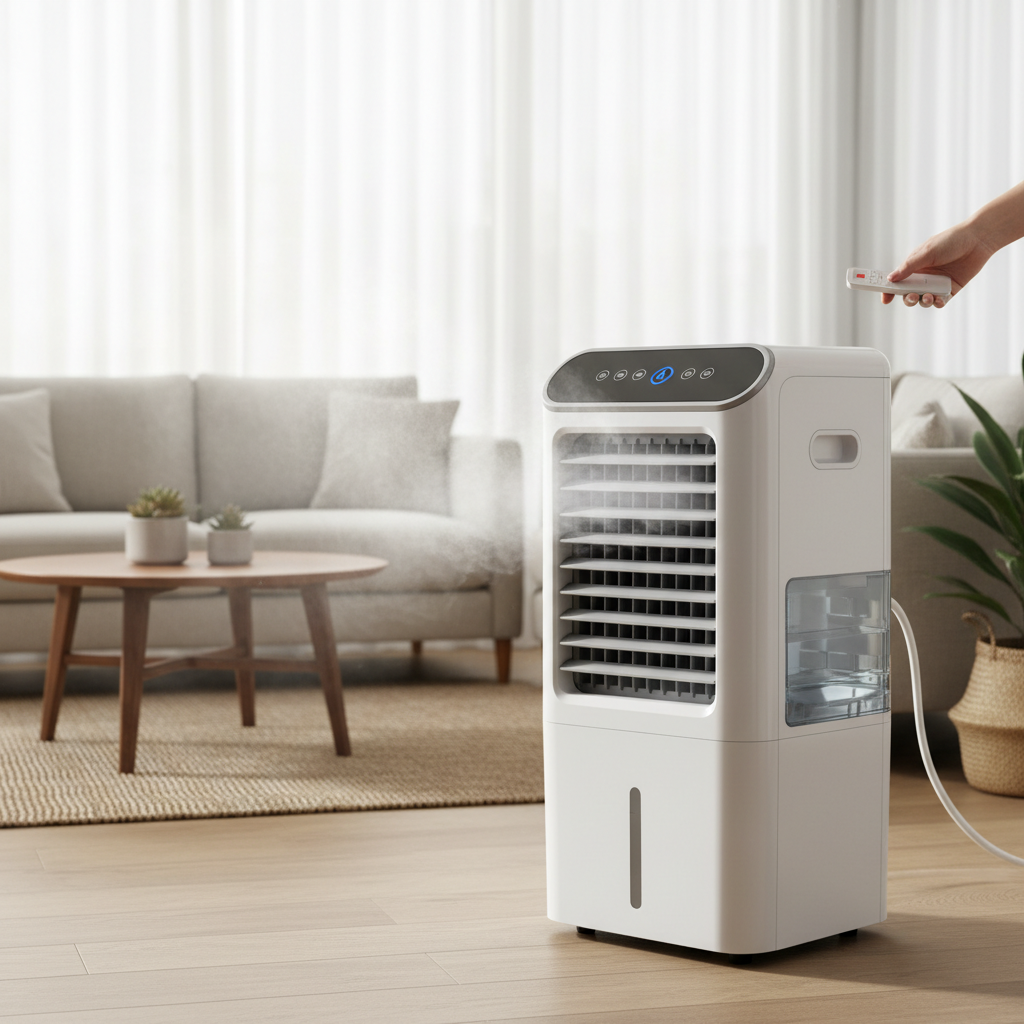
Are you tired of battling the summer heat with outdated cooling methods? Imagine adjusting your room’s temperature from your couch, your office, or even across town, all with a few taps on your smartphone or a simple voice command. Welcome to the world of smart air coolers with WiFi control, where convenience meets efficiency to keep your living space perfectly comfortable. These innovative devices are transforming how we manage indoor climate, offering a blend of modern technology and effective cooling.
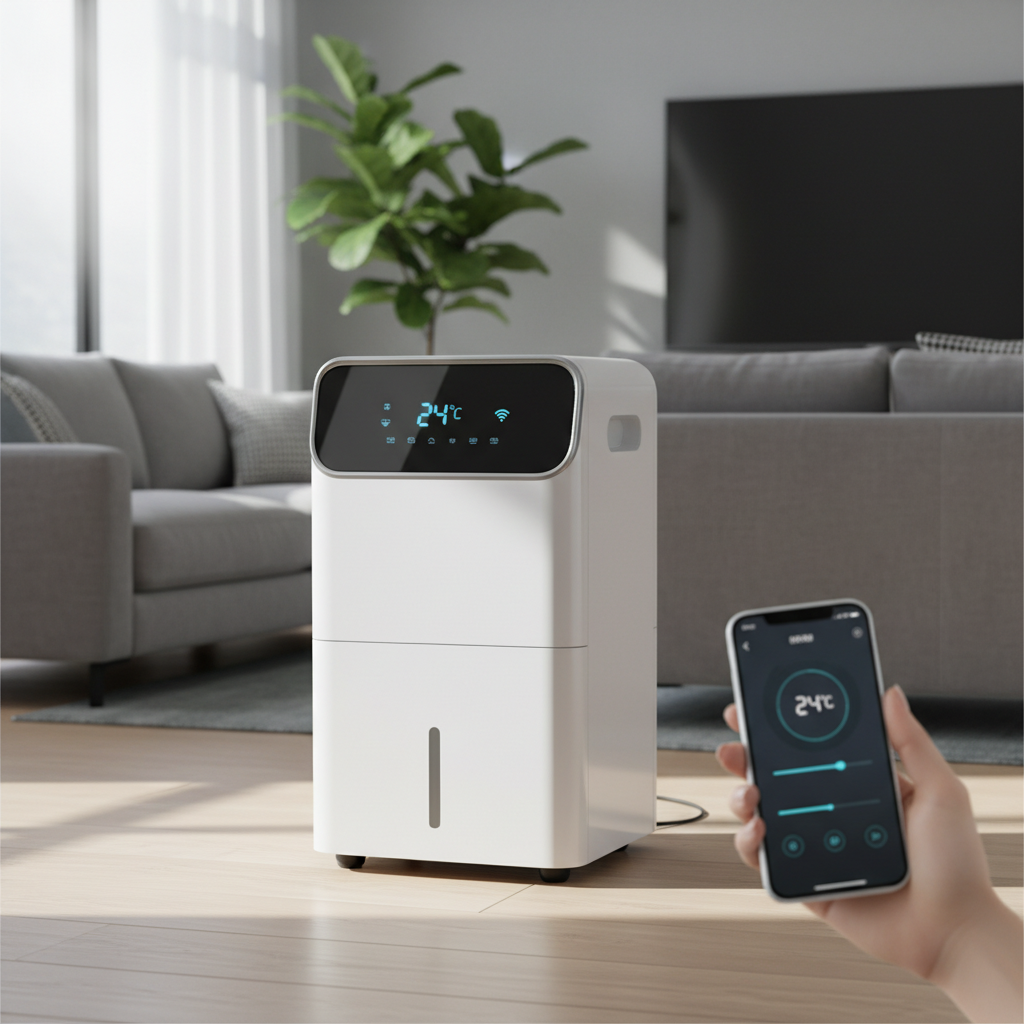
What is an Air Cooler?
An air cooler, often referred to as an evaporative cooler, functions on a natural principle: water evaporation. Unlike air conditioners that use refrigerants to remove heat and humidity, air coolers draw in warm air, pass it over water-soaked pads, and then release cooler, humidified air into the room. This process not only lowers the temperature but also adds moisture, making them particularly effective in hot, dry climates. Air coolers are generally more energy-efficient and cost-effective to operate than traditional air conditioners, consuming significantly less electricity. They are also known for their portability and lower maintenance requirements, offering a more eco-friendly approach to personal and room cooling.
Air Coolers vs. Air Conditioners: Understanding the Difference
While both aim to cool your space, air coolers and air conditioners operate fundamentally differently, catering to distinct needs and environments.
- Principle of Operation: Air coolers utilize evaporative cooling, where water absorbing heat from the air leads to a temperature drop. Air conditioners, conversely, employ a refrigerant cycle to actively remove heat and humidity from the air, expelling hot air outside.
- Humidity: Air coolers increase humidity, which is beneficial in dry climates but can be uncomfortable in already humid conditions. Air conditioners decrease humidity, making them ideal for sticky, moist environments.
- Energy Consumption & Cost: Air coolers are significantly more energy-efficient, often reducing electricity consumption by up to 80% compared to air conditioners. This translates to lower running costs and a more affordable upfront investment.
- Cooling Effectiveness: Air conditioners offer precise temperature control and can drastically lower room temperatures. Air coolers provide a refreshing breeze and a noticeable temperature drop, but their cooling power is less intense and less adjustable than an AC.
- Maintenance: Air coolers require simple, regular maintenance such as refilling the water tank and cleaning or replacing cooling pads. Air conditioners have more complex maintenance needs, including filter cleaning and refrigerant checks.
- Environmental Impact: Air coolers use water as their cooling medium and do not emit harmful gases like chlorofluorocarbons (CFCs), making them more environmentally friendly. Air conditioners use refrigerants, some of which can contribute to ozone depletion or have high global warming potential.
|
Our Picks for the Best Air cooler in 2026
As an Amazon Associate I earn from qualifying purchases.
|
||
| Num | Product | Action |
|---|---|---|
| 1 | LEVOIT Tower Fan for Bedroom, 90° Oscillating Standing Fan with 28dB Quiet for Sleep, 25ft/s Velocity, 12H Timer, 5 Speeds 4 Modes, Remoter, Bladeless Room Fan for Home, Office, Indoor, 36 inch, White |

|
| 2 | DREO Tower Fan for Bedroom, 2026 Upgraded DC Motor, 28ft/s High Velocity, 20dB Ultra Quiet Standing Fan, 8 Speeds 4 Modes, 90° Oscillating Bladeless Fan for Indoors, Floor Fans with Remote, Black |
|
| 3 | DREO Evaporative Air Swamp Cooler, 43" Cooling Fans that Blow Cold Air 2026 Upgraded, 80° Oscillating Floor Fan for Bedroom, Easy Cleaning, APP Control, Ice Packs, 4 Speeds & 4 Modes, 12H Timer, White |
|
| 4 | Midea 5,000 BTU EasyCool Small Window Air Conditioner - Cool up to 150 Sq. Ft. with Easy-to-Use Mechanical Controls and Reusable Filter, Perfect for Small Bedroom, Living Room, Home Office |
|
| 5 | Portable Air Conditioners, Swamp Cooler Portable AC Unit for Room, Windowless Cooling Fan That Blow Cold Air w/Remote 5L Tank 12 Speeds 9H Timer, Evaporative Air Cooler for Bedroom Garage (White) |
|
| 6 | Portable Air Conditioners, 3-IN-1 Evaporative Air Cooler,Cooling Fans that Blow Cold Air with 60° Oscillation,9H Timer,3 Modes & 12 Speeds, 8 Ice Packs, Windowless Portable AC for Room,Bedroom,Office |
|
| 7 | 3-in-1 Portable Evaporative Air Cooler - 2000 CFM Swamp Cooler with 6.6-Gal Dual Tank & 4 Ice Packs, Remote Control, 12H Timer, Oscillating Cooling Fan for Large Room, Office, Mother's Day |
|
| 8 | Evaporative Air Cooler - Swamp Cooler with 3L Water Tank, 3 Modes & 3 Speeds, Remote Control, 12H Timer, 50° Oscillating Portable Bladeless Cooling Tower Fan For Room Bedroom Office Mother's Day |
|
| 9 | DREO Tower Fan for Bedroom, 43" Cooling Fans That Blow Cold Air 2026 Upgraded, Evaporative Air Cooler, Quiet 80° Oscillating Floor Fan, Easy Cleaning, APP Control, 4 Modes & 4 Speeds, 12H Timer, Black |
|
| 10 | Arctic Air Pure Chill 2.0 Evaporative Air Cooler by Ontel - Powerful, Quiet, Lightweight and Portable Space Cooler with Hydro-Chill Technology For Bedroom, Office, Living Room & More,Blue |
|
Choosing the Perfect Smart Air Cooler for Your Home
Selecting the right smart air cooler involves considering several factors to ensure it meets your specific needs and integrates seamlessly into your lifestyle.
Determine Your Usage Needs
- Room Size: Evaluate the square footage of the area you intend to cool. Larger rooms require coolers with higher air circulation rates (measured in CFM or m³/hr) and potentially larger water tanks. Desktop models are suitable for personal cooling, while larger units can tackle entire rooms.
- Purpose of Use: Is it for your living room, bedroom, home office, or even an outdoor patio? Your usage scenario will influence the required power, portability, and features.
- Budget: Smart air coolers come in various price points. Define your budget early to narrow down options. While smart models may have a slightly higher upfront cost, their energy efficiency can lead to long-term savings.
Technical Factors to Consider
- Power Consumption: Look for models with lower wattage for maximum energy efficiency, especially if you plan to run it for extended periods.
- Airflow (CFM/m³/hr): This indicates how much air the cooler can circulate per minute or hour. Match this to your room size for effective cooling.
- Water Tank Capacity: A larger tank means longer operation without refills. For continuous overnight cooling, a tank of 7-9 liters or more is advisable.
- Noise Level (dBA): Especially important for bedrooms or quiet workspaces. Look for models with “sleep mode” or ratings below 50 dBA at their lowest settings.
- Operating Modes: Beyond basic cooling, look for modes like “natural breeze” (varying fan speed), “sleep mode” (quieter operation, lower speed), and fan-only options.
- Air Quality Features: Some advanced air coolers offer air purification features like ionizers, anti-bacterial filters, or activated carbon filters to improve indoor air quality.
Selecting Reputable Brands
Focus on brands known for reliability, customer support, and innovation in the home appliance market. While specific “smart air cooler” brands might be emerging, reputable manufacturers often integrate smart features into their existing cooling lines. Always check recent user reviews and expert recommendations.
Essential Smart Features
The “smart” aspect is key to your WiFi-controlled air cooler experience:
- Remote Control via App: The ability to control all functions (power, speed, mode, oscillation, timer) from a smartphone app is paramount. Look for intuitive apps with good user ratings.
- Voice Assistant Compatibility: Integration with platforms like Amazon Alexa, Google Assistant, or Apple HomeKit allows for hands-free control, making your cooler part of a larger smart home ecosystem.
- Scheduling and Timers: Program your cooler to turn on or off at specific times, ensuring a cool home when you arrive and saving energy when you’re away or asleep.
- Energy Monitoring: Some smart coolers provide data on energy consumption, helping you track usage and optimize settings for further savings.
- Automation (e.g., Geofencing): Advanced features like geofencing can automatically turn on your cooler when you’re a certain distance from home, or off when you leave.
Comparing Smart Air Cooler Price Segments
Smart air coolers are becoming more accessible, with options across various price points.
- Budget-Friendly Smart Air Coolers: These models offer basic WiFi control and app connectivity for essential functions. They might have smaller tank capacities, fewer advanced modes, or slightly higher noise levels. They are perfect for those new to smart home tech or with smaller spaces.
- Mid-Range Smart Air Coolers: This segment provides a balance of features, performance, and price. Expect larger tank capacities, more fan speeds and modes, better oscillation, and seamless integration with popular voice assistants. They are suitable for average-sized rooms and users seeking enhanced convenience.
- Premium Smart Air Coolers: High-end models boast superior design, quiet operation, robust construction, and a comprehensive suite of smart features. This includes advanced air purification, precise humidity control, intricate scheduling options, and often larger cooling capacities for bigger spaces. They represent the peak of smart cooling technology.
Top Smart Air Coolers with WiFi Control
As of 2026, the market for smart evaporative air coolers is evolving, with innovation focusing on user experience and efficiency.
- Princess Smart Air Cooler: This Dutch brand offers an evaporative cooler with excellent control options. It can be operated via a remote, the dedicated Princess Home app, or voice commands through Siri, Alexa, or Google Assistant. It features “Natural mode” for a fluctuating breeze and a “Sleep mode” for quieter operation, and includes ice packs for enhanced cooling. While its 3.5L tank requires more frequent refilling and it can be louder than some competitors, its smart control capabilities are a standout feature for its price point.
- Pros: Multiple control options (app, voice, remote), Natural and Sleep modes, includes ice packs.
- Cons: Smaller tank capacity (3.5L), can be noisy at higher settings.
- Ideal for: Users prioritizing smart control and voice assistant integration in smaller to medium rooms.
(Please note: While the market is rapidly developing, concrete “Top X of 2026” lists specifically for smart evaporative air coolers are still emerging. The Princess Smart Air Cooler is a leading example of current smart evaporative cooling technology.)
Comparison Table: Smart Air Coolers (Illustrative)
| Feature | Princess Smart Air Cooler | Model X (Mid-Range) | Model Y (Premium) |
|---|---|---|---|
| Cooling Capacity | Personal to Small Room | Medium Room | Large Room |
| Airflow (m³/hr) | 1,188 m³/hr | ~1,500-2,000 | ~2,500-3,500 |
| Water Tank Capacity | 3.5 L | 8-12 L | 15-20 L |
| Noise Level | Moderate | Low | Very Low |
| Smart Control | App, Voice, Remote | App, Voice, Remote | App, Voice, Remote, Advanced Automation |
| Special Features | Natural/Sleep Modes, Ice Packs | Humidification, Air Filter | Ionizer, Anti-bacterial filter, Geofencing |
| Approx. Price | £120 / $150 | $250-$400 | $500-$800 |
Proper Usage and Maintenance for Your Smart Air Cooler
To maximize efficiency and extend the lifespan of your smart air cooler, proper usage and maintenance are crucial.
- Placement and Operation: Place your air cooler in a well-ventilated area, ideally near an open window or door to allow fresh air intake and proper circulation. Avoid using it in completely sealed rooms, as this can lead to excessive humidity. Ensure the water tank is filled with clean water; adding ice packs or frozen water bottles can enhance cooling.
- Regular Cleaning: To prevent mold, mildew, and unpleasant odors, regularly clean the water tank and cooling pads. Follow the manufacturer’s instructions for removing and cleaning these components. Many models have easily accessible parts for cleaning. Replace cooling pads as recommended by the manufacturer, typically every few months to a year, depending on usage.
- Troubleshooting Common Issues: If cooling performance drops, check the water level, ensure pads are wet, and clean any dust buildup on the pads or fan blades. If smart features are not working, verify your WiFi connection and ensure the app is updated.
Important Considerations When Using Your Smart Air Cooler
- Ventilation is Key: Unlike air conditioners, air coolers work best in environments with good airflow. Keep a window or door slightly ajar to allow humid air to escape and fresh air to enter, optimizing the evaporative cooling process.
- Use Clean Water: Always fill your air cooler with clean, fresh water. Stagnant or contaminated water can lead to bacterial growth, affecting air quality and potentially causing odors.
- Monitor Humidity: While air coolers add beneficial humidity in dry climates, be mindful of excessive humidity in already moist environments. High humidity can make the air feel muggy and less comfortable.
Conclusion
Smart air coolers with WiFi control offer a refreshing blend of traditional evaporative cooling and cutting-edge smart home technology. They provide convenience, energy efficiency, and effective cooling, particularly in dry regions, making them a compelling choice for modern homes. From remote operation via smartphone apps to integration with voice assistants and energy monitoring, these devices empower you to manage your indoor climate with unprecedented ease. While the initial investment might be slightly higher than non-smart models, the long-term energy savings and enhanced comfort make them a worthwhile upgrade.
Are you ready to experience the future of personal cooling with a smart air cooler?
Frequently Asked Questions
How do smart air coolers differ from traditional air coolers?
Smart air coolers integrate WiFi connectivity, allowing them to be controlled remotely via smartphone apps or voice assistants. This adds features like scheduling, energy monitoring, and automation, which are not available on traditional, manual air cooler models.
Can smart air coolers be used in humid climates?
Smart air coolers, like all evaporative coolers, perform best in hot, dry climates where they can add beneficial humidity. In very humid environments, their cooling effectiveness is reduced, and they may make the air feel muggier rather than cooler.
Do smart air coolers consume a lot of electricity?
No, smart air coolers are known for their energy efficiency. They typically consume significantly less electricity than air conditioners, often reducing energy bills by a substantial margin. The WiFi module itself uses negligible power.
Are smart air coolers compatible with all smart home systems?
Compatibility varies by brand and model. Many smart air coolers are designed to work with popular ecosystems like Amazon Alexa and Google Assistant, while others might have proprietary apps. Always check the product specifications for compatibility with your existing smart home setup.
How often should I clean my smart air cooler?
Regular cleaning is essential. It’s recommended to clean the water tank and cooling pads at least once a week, or more frequently with heavy use, to prevent bacterial growth and maintain optimal performance and air quality. Replace cooling pads as per manufacturer guidelines.