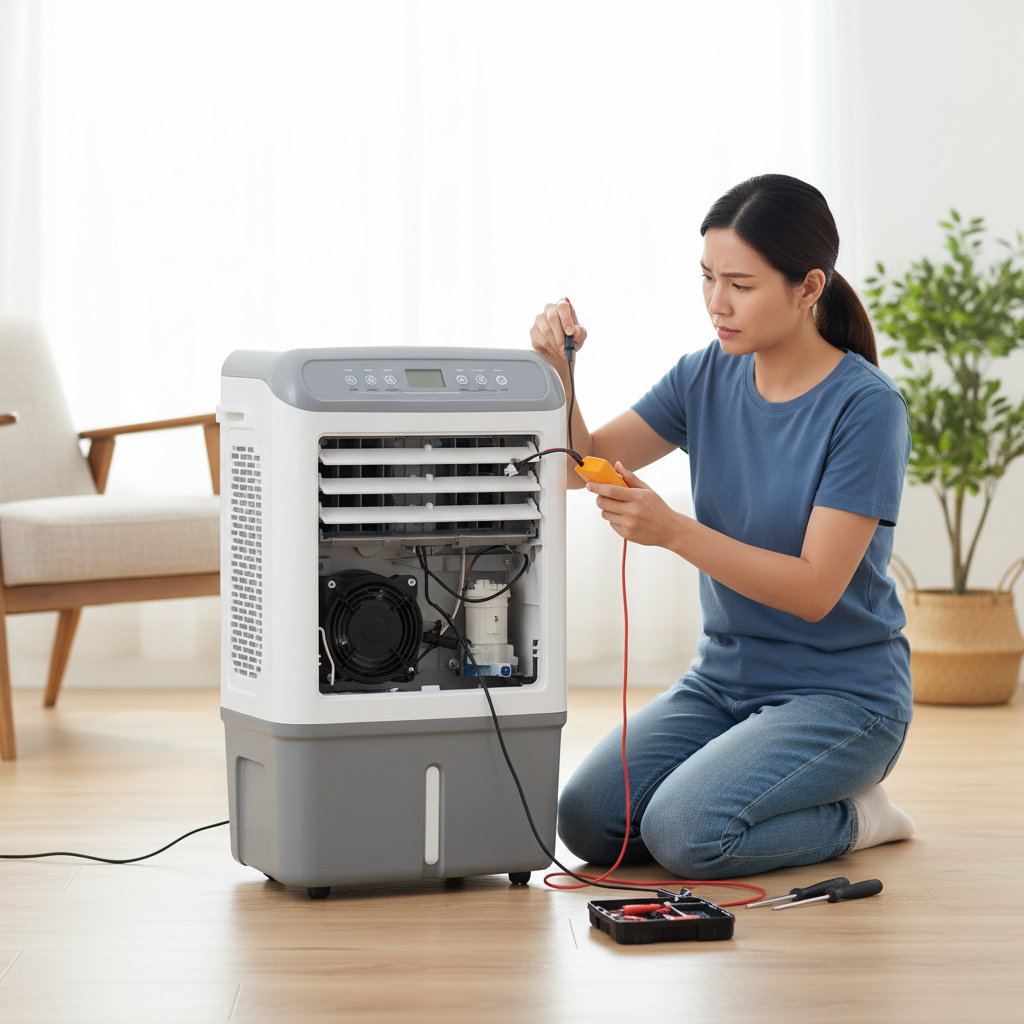
Are you struggling to keep your outdoor spaces comfortable during the scorching summer months? With temperatures steadily rising, finding an effective yet efficient way to cool your patio or deck has become a top priority for homeowners. Traditional air conditioning is often impractical for open-air environments, leading many to seek out smarter, more sustainable solutions. This guide will walk you through everything you need to know about selecting the best outdoor air cooler for your specific needs in 2026, ensuring you can enjoy your outdoor oasis even on the hottest days.
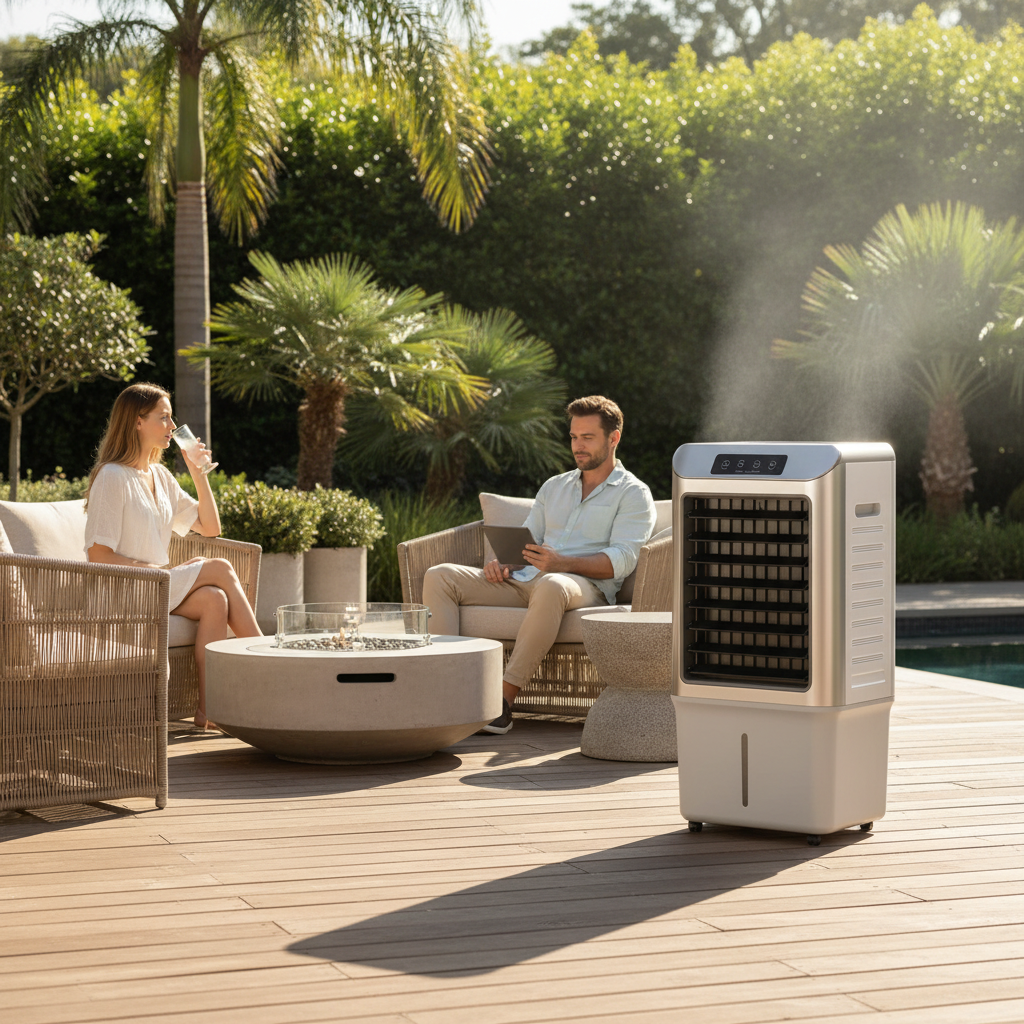
What Are Outdoor Air Coolers (Evaporative Coolers)?
Outdoor air coolers, often referred to as evaporative coolers or swamp coolers, are ingenious cooling devices that utilize the natural process of water evaporation to lower air temperature. Unlike conventional air conditioners that rely on refrigerants and sealed environments, these coolers draw in warm, ambient air and pass it over water-saturated pads. As the water evaporates from these pads, it absorbs heat from the air, resulting in a stream of cooler, slightly humidified air being circulated into your outdoor space. This process is similar to the refreshing sensation you feel near a waterfall on a hot day.
The fundamental difference between an outdoor air cooler and an air conditioner lies in their operating principle and environmental impact. Air conditioners use a refrigeration cycle with chemical refrigerants to cool air, and they work best in sealed indoor spaces. Outdoor air coolers, however, are designed for open or semi-enclosed outdoor areas and use only water, making them significantly more energy-efficient and eco-friendly. They consume considerably less electricity—typically 70-200 watts compared to over 1,000 watts for an AC unit—and release no harmful chemicals into the atmosphere.
The primary advantages of outdoor air coolers include their low energy consumption, lower operating costs, and their ability to provide fresh, filtered air without the need for windows or doors to be closed. They are also highly portable, allowing you to move them wherever cooling is needed most. However, their main limitation is their effectiveness in high-humidity environments. Since they add moisture to the air, they perform optimally in dry climates where the air can readily absorb more water. In very humid conditions, they can make the air feel clammy rather than cool, though outdoor-rated units can still be effective in covered outdoor spaces even in more humid regions.
How to Choose the Perfect Outdoor Air Cooler for Your Space
Selecting the right outdoor air cooler involves evaluating several factors to ensure it meets your specific requirements for comfort and efficiency.
Assess Your Cooling Needs:
- Area Size (Patios, Decks): The size of your outdoor space is crucial. Evaporative coolers are rated by Cubic Feet per Minute (CFM), which indicates the volume of air they can move. A unit that is too small for your patio won’t provide adequate cooling, while an oversized unit might be overkill. For small patios up to 500 sq ft, a cooler with at least 2,000 CFM is recommended. Medium to large patios (up to 950 sq ft) might require 3,000-3,700 CFM, and very large areas (up to 2,300 sq ft) could need 3,400 CFM or more. A general rule of thumb to calculate the required CFM is to multiply the square footage of your space by the ceiling height and divide by two.
- Climate (Humidity Levels): As discussed, outdoor air coolers thrive in dry climates (below 50% relative humidity). If you live in a region with high humidity, an evaporative cooler’s effectiveness will be reduced as the air is already saturated with moisture. In such cases, while still providing some relief, the perceived cooling might be less dramatic.
- Budget: Outdoor air coolers come in a range of price points. Establishing a budget early on will help you narrow down your options, balancing performance with affordability. Remember to also consider the long-term savings on energy bills compared to air conditioning.
|
Our Picks for the Best Air cooler in 2026
As an Amazon Associate I earn from qualifying purchases.
|
||
| Num | Product | Action |
|---|---|---|
| 1 | Evaporative Air Cooler - Swamp Cooler with 3L Water Tank, 3 Modes & 3 Speeds, Remote Control, 12H Timer, 50° Oscillating Portable Bladeless Cooling Tower Fan For Room Bedroom Office Mother's Day |

|
| 2 | Portable Air Conditioners, 3-IN-1 Evaporative Air Cooler,Cooling Fans that Blow Cold Air with 60° Oscillation,9H Timer,3 Modes & 12 Speeds, 8 Ice Packs, Windowless Portable AC for Room,Bedroom,Office |
|
| 3 | 3-in-1 Portable Evaporative Air Cooler - 2000 CFM Swamp Cooler with 6.6-Gal Dual Tank & 4 Ice Packs, Remote Control, 12H Timer, Oscillating Cooling Fan for Large Room, Office, Mother's Day |
|
| 4 | DREO Tower Fan for Bedroom, 2026 Upgraded DC Motor, 28ft/s High Velocity, 20dB Ultra Quiet Standing Fan, 8 Speeds 4 Modes, 90° Oscillating Bladeless Fan for Indoors, Floor Fans with Remote, Black |
|
| 5 | DREO Evaporative Air Swamp Cooler, 43" Cooling Fans that Blow Cold Air 2026 Upgraded, 80° Oscillating Floor Fan for Bedroom, Easy Cleaning, APP Control, Ice Packs, 4 Speeds & 4 Modes, 12H Timer, White |
|
| 6 | Midea 5,000 BTU EasyCool Small Window Air Conditioner - Cool up to 150 Sq. Ft. with Easy-to-Use Mechanical Controls and Reusable Filter, Perfect for Small Bedroom, Living Room, Home Office |
|
| 7 | Arctic Air Pure Chill 2.0 Evaporative Air Cooler by Ontel - Powerful, Quiet, Lightweight and Portable Space Cooler with Hydro-Chill Technology For Bedroom, Office, Living Room & More,Blue |
|
| 8 | DREO Tower Fan for Bedroom, 43" Cooling Fans That Blow Cold Air 2026 Upgraded, Evaporative Air Cooler, Quiet 80° Oscillating Floor Fan, Easy Cleaning, APP Control, 4 Modes & 4 Speeds, 12H Timer, Black |
|
| 9 | LEVOIT Tower Fan for Bedroom, 90° Oscillating Standing Fan with 28dB Quiet for Sleep, 25ft/s Velocity, 12H Timer, 5 Speeds 4 Modes, Remoter, Bladeless Room Fan for Home, Office, Indoor, 36 inch, White |
|
| 10 | Portable Air Conditioners, Swamp Cooler Portable AC Unit for Room, Windowless Cooling Fan That Blow Cold Air w/Remote 5L Tank 12 Speeds 9H Timer, Evaporative Air Cooler for Bedroom Garage (White) |
|
Key Technical Factors to Consider:
- CFM (Cubic Feet per Minute) and Coverage Area: This is arguably the most important specification. Always check the manufacturer’s rated coverage area and CFM. If your area receives a lot of direct sunlight or has heat-generating elements (like a grill), consider increasing the CFM by about 20% for optimal performance.
- Water Source and Tank Capacity: Many outdoor air coolers feature automatic garden hose connections for continuous water supply, which is highly convenient for extended use without manual refills. If a continuous hook-up isn’t feasible, consider units with large water tank capacities (e.g., 10-20 gallons) to minimize refilling frequency, as smaller tanks may need to be topped up every 4-8 hours.
- Portability: For outdoor use, portability is key. Look for units equipped with sturdy wheels or casters and robust handles, allowing you to easily move the cooler across your patio or deck to target specific areas.
- Controls and Features: Modern outdoor air coolers offer a variety of convenient features. A remote control allows for easy adjustments from a distance. Variable speed fans provide flexibility in airflow intensity. Programmable timers can help manage operation, and oscillating louvers are excellent for distributing cool air evenly across a wider area.
- Evaporative Pad Type: The cooling pads are central to the cooler’s performance. Rigid media pads are generally more durable, require less frequent cleaning, and last longer than fiber pads, though they can be more costly upfront. Fiber pads are more economical but demand more maintenance and replacement.
- Noise Level: While generally quieter than traditional AC units, the fan type can influence noise. Centrifugal fans tend to be quieter but may consume more energy and cost more than axial fans. Check decibel ratings if noise is a significant concern for your peaceful outdoor environment.
- Durability and Weather Resistance: Since these units are for outdoor use, they must be built to withstand the elements. Look for models made with robust, weather-resistant materials like ABS plastic, and features such as UV resistance for longevity.
Top Outdoor Air Coolers for Patios and Decks in 2026
The market for outdoor air coolers continues to evolve, with new models offering enhanced features and efficiency. Here are some of the top picks for 2026, known for their performance, durability, and suitability for outdoor living spaces:
- Hessaire MC18M Portable Evaporative Cooler: An affordable and compact option, ideal for smaller patios, pool decks, or balconies up to 500 square feet. It’s known for its simple setup and ease of operation with a straightforward control dial.
- Hessaire MC37M 3100-CFM Evaporative Cooler: A more powerful choice capable of cooling up to 950 square feet, making it suitable for medium-to-large patios and garages. This model features UV-resistant polypropylene construction, continuous fill options, and multiple speed settings.
- Hessaire MC61M Evaporative Cooler: Blasting 5,300 CFM, this powerful unit is well-suited for both indoor and outdoor use. It includes three fan speeds, easily accessible controls, and oscillating louvers to disperse air over a large space.
- Big Ass Fans Cool Space 350: For especially large outdoor areas like extensive patios, workshops, or warehouses up to 2,300 square feet, this model delivers. It boasts a 20-inch diameter fan generating up to 3,400 CFM with a durable housing and variable speed control. Its 50-gallon tank can support up to 10 hours of uninterrupted operation, or it can be connected to a continuous water source.
- Champion CP70 Ultracool: This is one of the lighter evaporative coolers, perfect for small decks and covered patios up to 350 square feet. It offers reliable cooling in a more compact and manageable size.
- Vankool VAB07-EQ: With an impressive airflow capacity of 7000 CMH (approximately 4120 CFM), this model is designed for larger areas up to 35-50 square meters (375-538 sq ft), making it ideal for outdoor decks and patios.
- Vankool VAB05-DC (Solar Portable): A unique solar-powered portable air cooler, suitable for areas up to 45-60 square meters (484-645 sq ft). It’s a great option for large workshops and patios where power access might be limited.
Comparison Table of Popular Outdoor Air Coolers
| Feature | Hessaire MC18M | Hessaire MC37M | Big Ass Fans Cool Space 350 |
|---|---|---|---|
| Coverage (sq ft) | Up to 500 | Up to 950 | Up to 2,300 |
| Max. CFM | ~2,000 (estimated) | 3,100 | 3,400 |
| Water Source | Manual/Hose | Manual/Hose | Continuous hose fill |
| Portability | Lightweight, wheels | Rolling casters | Locking swivel casters |
| Key Features | Simple dial, 5 settings | UV-resistant, 3 speeds | Variable speed, 50-gal tank |
| Ideal For | Small patios, balconies | Medium-large patios, garages | Large patios, workshops |
Using and Maintaining Your Outdoor Air Cooler
Proper usage and regular maintenance are crucial for maximizing the efficiency and lifespan of your outdoor air cooler.
Setup and Placement Tips:
For optimal performance, position your evaporative cooler in an area that allows for good airflow, such as near seating areas, under a covered pergola, or near wind-blocking plants. Ensure the unit has access to fresh air for intake. While outdoor units are designed for open spaces, strategic placement can help contain the cooled air and prevent it from dissipating too quickly. For models with continuous water hook-ups, ensure easy access to a garden hose and water source.
Regular Cleaning and Maintenance:
- Clean the Water Tank: Regularly empty and clean the water tank to prevent the buildup of algae, mold, and mineral deposits. This is especially important for units with manual fill tanks.
- Inspect and Clean Cooling Pads: The evaporative pads are the heart of the cooling process. Inspect them regularly for debris or mineral accumulation. Clean or replace them according to the manufacturer’s recommendations (rigid media pads typically last 3-5 years).
- Check for Clogs: Ensure the water pump and distribution system are free of clogs to maintain consistent water flow over the pads.
- Winter Storage: Before storing your cooler for the off-season, ensure it is thoroughly cleaned and dried to prevent mold growth.
Troubleshooting Common Issues:
- Not Cooling Effectively: Check water levels, ensure the pump is working, and clean the cooling pads. Verify that the unit is appropriately sized for your space and that humidity levels aren’t too high.
- Bad Odor: This often indicates bacterial or mold growth in the water tank or on the pads. A thorough cleaning with a mild disinfectant can usually resolve this.
- Excessive Noise: Check for obstructions in the fan or uneven placement. If the motor is making unusual noises, professional servicing might be required.
Important Considerations for Outdoor Air Cooler Use
To get the most out of your outdoor air cooler, keep these vital points in mind:
- Climate Suitability: Always remember that evaporative coolers work best in hot, dry climates. If your area experiences high humidity consistently, while an outdoor unit can still offer some relief in a covered area, its cooling capacity will be diminished.
- Water Quality: Using clean water helps prevent mineral buildup on the pads and in the tank, extending the life of your unit and ensuring efficient operation. Distilled or filtered water can be used, though tap water is generally fine if cleaned regularly.
- Safety Tips: Always follow the manufacturer’s safety instructions. Ensure the unit is placed on a stable, level surface and that electrical cords are in good condition and protected from water.
“For effective, low-cost cooling in a dry-climate patio under 1,500 sq ft, prioritize a portable evaporative cooler with garden hose connectivity and at least 3,000 CFM.” – Wellness Hub, Practical Guide to Outdoor Evaporative Coolers
Conclusion
Choosing the best outdoor air cooler for your patio or deck in 2026 means understanding their unique benefits and how they differ from traditional air conditioning. These energy-efficient, eco-friendly devices offer a refreshing escape from the summer heat, transforming your outdoor living areas into comfortable havens. By considering factors like CFM, water capacity, portability, and climate suitability, you can confidently select a model that perfectly matches your needs. With proper placement and maintenance, your outdoor air cooler will provide countless hours of cool comfort. What steps will you take to keep your outdoor spaces perfectly cool this summer?
Frequently Asked Questions
How much humidity do outdoor air coolers add?
Outdoor air coolers inherently add some moisture to the air as part of their evaporative cooling process. In dry climates, this added humidity can actually be a benefit, making the air feel more comfortable. The actual amount varies by unit and environmental conditions, but it’s typically enough to lower the perceived temperature significantly without making the air unpleasantly damp in appropriate climates.
Can I use an outdoor air cooler in a humid climate?
While evaporative coolers are most effective in dry climates, outdoor-rated portable evaporative coolers can still provide some cooling relief in covered outdoor spaces even in more humid regions. However, their efficiency will be reduced, and the air may feel less cool and potentially clammy compared to their performance in dry conditions.
How often do I need to refill the water tank?
The frequency of refilling depends on the cooler’s water tank capacity and its operational settings. Units with smaller tanks (e.g., 10-20 gallons) may require refilling every 4-8 hours. For continuous operation without frequent intervention, look for models with an automatic garden hose hook-up.
Are outdoor air coolers noisy?
Outdoor air coolers are generally quieter than traditional air conditioners. The noise level can vary depending on the fan type (centrifugal fans are typically quieter than axial fans) and the fan speed setting. Most modern outdoor models are designed to operate at acceptable noise levels for outdoor living spaces.
How much energy do outdoor air coolers use?
One of the key advantages of outdoor air coolers is their energy efficiency. They typically use significantly less electricity than air conditioners, consuming around 70-200 watts compared to 1,000+ watts for an AC. This translates to lower operating costs and a smaller environmental footprint.