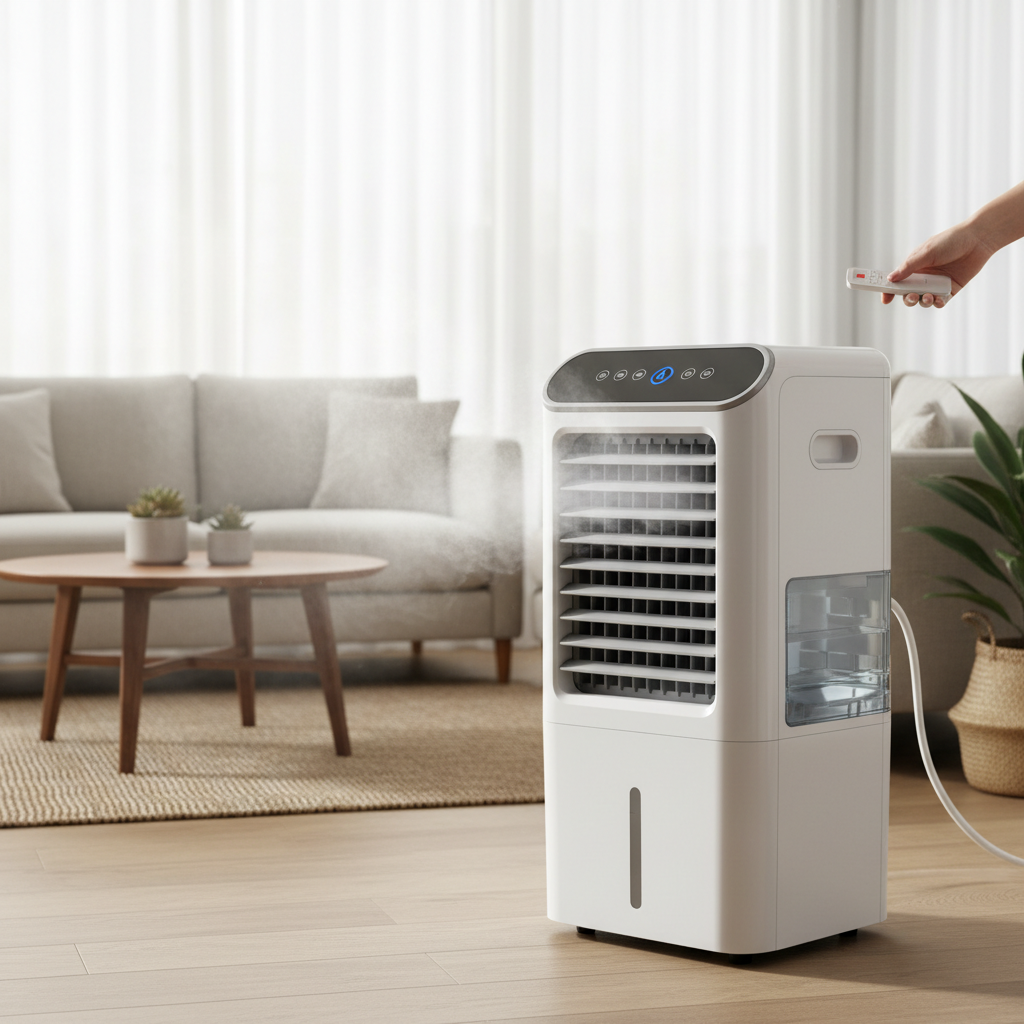
Living off the grid offers unparalleled freedom, but it also presents unique challenges, especially when it comes to staying cool in a world where temperatures are consistently rising. Traditional air conditioning units are notorious energy hogs, making them impractical for most solar-powered off-grid setups. This is where solar powered air coolers step in as a game-changer. These innovative devices offer an eco-friendly, cost-effective, and sustainable solution to combat the heat, ensuring comfort without compromising your off-grid lifestyle. By harnessing the sun’s abundant energy, these air coolers provide a refreshing escape from the heat, making remote living more enjoyable and feasible than ever before.
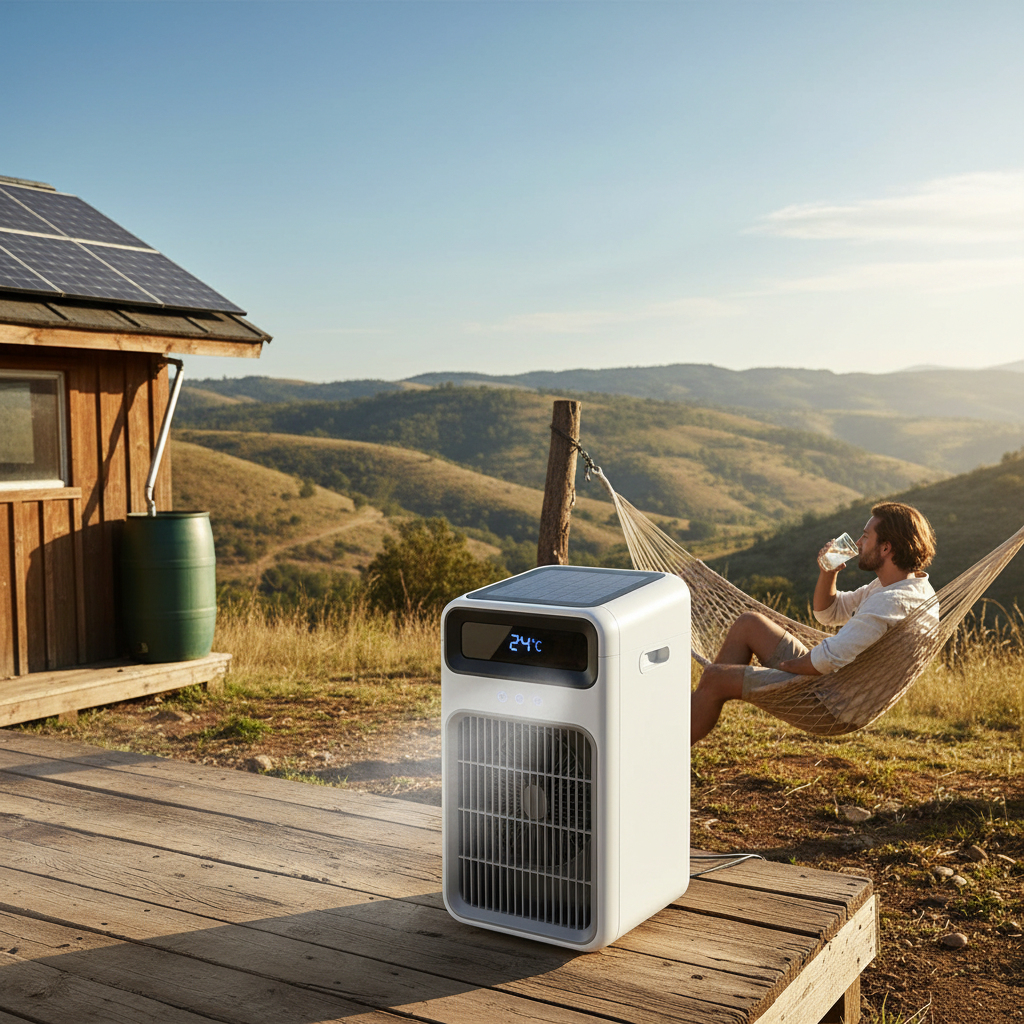
What Exactly is a Solar Powered Air Cooler?
A solar powered air cooler, often referred to as a solar evaporative cooler or swamp cooler, is a cooling system that operates by utilizing solar energy to power its mechanism. Unlike conventional air conditioners that rely on refrigerants and complex compressors, these coolers employ the natural process of evaporation to lower ambient temperatures. Hot, dry air passes through water-soaked cooling pads, causing the water to evaporate. This evaporation absorbs heat from the air, resulting in a significantly cooler, moister breeze. A fan then circulates this refreshing air into your living space.
The core components of a typical solar air cooler system include a photovoltaic (PV) solar panel to capture sunlight, a battery bank for energy storage (crucial for nighttime or cloudy day operation), a charge controller to manage power flow, a water pump to keep the cooling pads saturated, and a fan to draw in hot air and expel cooled air.
It’s vital to differentiate solar air coolers from solar-powered refrigerators or freezers. While both use solar energy, solar fridges are designed to keep food and beverages cold using refrigeration cycles, whereas solar air coolers are specifically engineered to cool the air within a room or outdoor living area.
Compared to traditional AC units, solar air coolers offer several distinct advantages, particularly for off-grid scenarios. They consume significantly less energy, eliminate the need for harsh chemical refrigerants, and perform exceptionally well in hot, dry climates. However, their efficiency decreases in highly humid environments, where the air is already saturated with moisture and less evaporation can occur.
“The shift towards sustainable cooling is not just about energy savings; it’s about reimagining how we interact with our environment. Solar air coolers empower off-gridders to achieve comfort without compromise.”
Pros and Cons of Solar Air Coolers for Off-Grid
Pros:
- Energy Independence: Operate entirely on solar power, freeing you from reliance on the grid and eliminating electricity bills.
- Environmental Friendliness: Produce zero carbon emissions during operation, contributing to a cleaner, greener planet.
- Cost-Effectiveness: While initial setup costs may exist, long-term operational expenses are minimal, relying on free solar energy.
- Reliability: With a battery backup, they provide consistent cooling even during power outages or when sunlight is intermittent.
- Portability: Many models are designed to be lightweight and portable, ideal for RVs, cabins, tents, or any remote location.
- Improved Air Quality: They introduce fresh, filtered, and often humidified air, which can be beneficial in dry climates.
Cons:
- Humidity Limitation: Less effective in high-humidity regions as evaporation rates are reduced.
- Water Requirement: Need a continuous supply of water for the evaporative process, which might be a consideration in arid off-grid locations.
- Cooling Extent: Do not achieve the same low temperatures as refrigerant-based air conditioners; they cool ambient air rather than chilling it intensely.
- Initial Investment: Upfront cost for the unit and solar components can be higher than conventional fans.
- Maintenance: Require regular cleaning of water tanks and cooling pads to prevent mold and mildew growth.
|
Our Picks for the Best Air cooler in 2026
As an Amazon Associate I earn from qualifying purchases.
|
||
| Num | Product | Action |
|---|---|---|
| 1 | Arctic Air Pure Chill 2.0 Evaporative Air Cooler by Ontel - Powerful, Quiet, Lightweight and Portable Space Cooler with Hydro-Chill Technology For Bedroom, Office, Living Room & More,Blue |

|
| 2 | DREO Evaporative Air Swamp Cooler, 43" Cooling Fans that Blow Cold Air 2026 Upgraded, 80° Oscillating Floor Fan for Bedroom, Easy Cleaning, APP Control, Ice Packs, 4 Speeds & 4 Modes, 12H Timer, White |
|
| 3 | Portable Air Conditioners, 3-IN-1 Evaporative Air Cooler,Cooling Fans that Blow Cold Air with 60° Oscillation,9H Timer,3 Modes & 12 Speeds, 8 Ice Packs, Windowless Portable AC for Room,Bedroom,Office |
|
| 4 | Midea 5,000 BTU EasyCool Small Window Air Conditioner - Cool up to 150 Sq. Ft. with Easy-to-Use Mechanical Controls and Reusable Filter, Perfect for Small Bedroom, Living Room, Home Office |
|
| 5 | 3-in-1 Portable Evaporative Air Cooler - 2000 CFM Swamp Cooler with 6.6-Gal Dual Tank & 4 Ice Packs, Remote Control, 12H Timer, Oscillating Cooling Fan for Large Room, Office, Mother's Day |
|
| 6 | Evaporative Air Cooler - Swamp Cooler with 3L Water Tank, 3 Modes & 3 Speeds, Remote Control, 12H Timer, 50° Oscillating Portable Bladeless Cooling Tower Fan For Room Bedroom Office Mother's Day |
|
| 7 | LEVOIT Tower Fan for Bedroom, 90° Oscillating Standing Fan with 28dB Quiet for Sleep, 25ft/s Velocity, 12H Timer, 5 Speeds 4 Modes, Remoter, Bladeless Room Fan for Home, Office, Indoor, 36 inch, White |
|
| 8 | DREO Tower Fan for Bedroom, 43" Cooling Fans That Blow Cold Air 2026 Upgraded, Evaporative Air Cooler, Quiet 80° Oscillating Floor Fan, Easy Cleaning, APP Control, 4 Modes & 4 Speeds, 12H Timer, Black |
|
| 9 | Portable Air Conditioners, Swamp Cooler Portable AC Unit for Room, Windowless Cooling Fan That Blow Cold Air w/Remote 5L Tank 12 Speeds 9H Timer, Evaporative Air Cooler for Bedroom Garage (White) |
|
| 10 | DREO Tower Fan for Bedroom, 2026 Upgraded DC Motor, 28ft/s High Velocity, 20dB Ultra Quiet Standing Fan, 8 Speeds 4 Modes, 90° Oscillating Bladeless Fan for Indoors, Floor Fans with Remote, Black |
|
Why Choose Solar Powered Air Coolers for Off-Grid?
For anyone embracing an off-grid lifestyle, solar powered air coolers offer compelling advantages that align perfectly with the philosophy of self-sufficiency and environmental stewardship.
Firstly, they provide complete energy independence. Your cooling needs are met directly by the sun, reducing or entirely eliminating your reliance on noisy generators or expensive grid connections. This autonomy is a cornerstone of off-grid living, and solar air coolers deliver it for personal comfort.
Secondly, the environmental benefits are substantial. By utilizing a renewable energy source, these coolers drastically reduce your carbon footprint, contributing to a healthier planet. This aligns with sustainable living practices and minimizes the ecological impact of your remote dwelling.
Thirdly, solar air coolers offer unmatched reliability during power outages. While grid-tied homes suffer during blackouts, your off-grid sanctuary remains cool, thanks to integrated battery storage. This makes them an essential component for preparedness and consistent comfort in remote areas with unreliable power infrastructure.
Lastly, their inherent design makes them perfectly suited for remote locations. Many models are portable, easy to set up, and require minimal infrastructure beyond sunshine and water. Whether you’re in a tiny cabin, an RV, or a wilderness retreat, a solar air cooler can provide much-needed relief from the heat.
Key Factors for Choosing the Perfect Off-Grid Solar Air Cooler
Selecting the right solar powered air cooler involves careful consideration of several technical and practical aspects to ensure it meets your specific off-grid needs.
Cooling Capacity & Coverage Area
The effectiveness of an air cooler is measured by its airflow, typically expressed in Cubic Feet per Minute (CFM) or Cubic Meters per Hour (m³/h). Match the cooler’s capacity to the size of the room or area you intend to cool. A larger CFM rating indicates a stronger airflow and ability to cool a bigger space. For off-grid applications, understanding your specific area requirements, whether a small tent or a larger cabin, is crucial.
Power Source & Battery Life
Off-grid reliability hinges on power management. Look for coolers with:
- Integrated Solar Panels: Some units come with built-in panels for direct charging.
- External Solar Panel Compatibility: Allows for flexible panel placement to optimize sun exposure.
- Battery Type & Capacity: Lithium-ion batteries are preferred for their longevity and energy density. Assess the battery’s Amp-hour (Ah) or Watt-hour (Wh) rating to understand its runtime, especially for overnight cooling. Newer models often boast longer runtimes and quicker charging.
- Charging Options: Hybrid models that can also charge via DC (car adapter) or AC (if a generator is occasionally used) offer greater flexibility.
Water Tank Capacity & Refill Options
Since evaporative coolers rely on water, the tank size is important. A larger tank means less frequent refilling, which is convenient in off-grid settings where water might be scarce. Some advanced units offer continuous water inlet support, allowing connection to a hose or a larger external water supply. Consider how easily you can access and refill the water tank.
Portability & Durability
For off-grid living, especially if you move locations or want to cool different areas, portability is key. Look for lightweight designs, sturdy wheels, and integrated handles. Durability is equally important; off-grid environments can be harsh, so a robust build quality that resists weather and impacts is a significant advantage.
Climate Suitability
Evaporative coolers thrive in hot, dry climates (e.g., deserts, arid regions) where the humidity is low (ideally below 60%, or even 30% for optimal performance). In humid climates, they become less effective as the air is already saturated, and adding more moisture can feel sticky rather than cool. If your off-grid location experiences high humidity, a specialized solar-powered air conditioner (if within your power budget) might be a better, albeit more energy-intensive, choice.
Noise Level
Living in peace off the grid means minimizing disturbances. Check the cooler’s decibel (dB) rating. Quieter operation is essential, especially for bedrooms or small living spaces where continuous noise can be bothersome.
Additional Features
Modern solar air coolers come with a range of features that enhance user experience:
- Remote Control: For convenient operation from a distance.
- Timer Functions: To set specific operating durations, conserving battery life.
- Swing Function: Automatic oscillation distributes cool air evenly across a wider area.
- Air Purification: Some models include filters or ionizers for cleaner air.
- Display Screens: Digital displays provide information on settings and water levels.
Budget Considerations
Solar air coolers are available across various price points.
- Entry-Level: Often smaller, simpler, with fewer features, suitable for personal cooling or very small spaces. They might rely more on direct sunlight without extensive battery backup.
- Mid-Range: Offer a good balance of features, cooling capacity, and battery life, suitable for small rooms or RVs. They typically come with integrated or compatible solar panels and decent battery storage.
- Premium/High-End: Boast superior cooling power, extended battery life, advanced features (like smart controls, hybrid charging, robust build), and may include actual DC inverter air conditioning technology for more powerful cooling.
Top Solar Powered Air Coolers for Off-Grid in 2026
The market for solar air coolers is continually evolving, with advancements in efficiency and battery technology making them more viable for off-grid living. Here are some of the standout options for 2026, encompassing different needs and price points.
Vankool VAB25-DC Portable Mini Cooler
This compact and lightweight solar air cooler is designed for personal comfort and small off-grid spaces. It features direct solar panel compatibility with a low-voltage DC motor, making it highly energy-efficient. The moderate-sized water tank provides several hours of cooling, and its honeycomb cooling pads ensure reliable air circulation. It’s an ideal choice for a single person’s bedroom, a small office space, or a compact RV, offering quiet operation and easy mobility with castor wheels.
Vankool VAB06-DC Portable Air Cooler
Stepping up in size and airflow, the VAB06-DC is a versatile portable solar evaporative cooler suitable for larger rooms or semi-outdoor off-grid areas. With a higher airflow capacity (e.g., 6000 m³/h, as seen in similar models), it can effectively cool medium-sized spaces. It also boasts a fully solar-compatible DC motor, a large-capacity water tank with an option for continuous water supply, and thick honeycomb cooling pads for enhanced evaporation. Its portability, combined with powerful cooling, makes it a popular choice for workshops, garages, or larger cabin living rooms where grid power is absent.
Vankool VABW10-DC Premium Solar Window Cooler
For a more integrated and powerful cooling solution in an off-grid structure, the VABW10-DC represents a premium-grade solar window cooler. It combines a sleek design with advanced functionality, offering powerful airflow and low energy consumption. Key features often include solar + grid hybrid compatibility (for those with occasional generator access), automatic swing shutters for better airflow distribution, and a large tank with continuous water inlet support. It also integrates honeycomb pads and an ice chamber for an extra cooling effect, alongside smart remote and Wi-Fi connectivity for app-based control, making it a sophisticated option for more permanent off-grid homes.
Deye Hybrid ACDC Solar Air Water Cooler (Solar Air Conditioner)
While technically a solar air conditioner and not an evaporative “air cooler,” the Deye Hybrid ACDC unit is worth mentioning for off-grid users seeking more powerful, refrigerant-based air cooling directly from solar. This innovative system can run entirely on solar power during the day, achieving 100% energy savings from the grid. It seamlessly transitions to AC grid power (or generator power) as needed at night. With no inverter or battery required for direct daytime solar operation, it’s a highly efficient, fully DC-driven system designed for a wide operating temperature range (-10°C to 58°C). This unit is suitable for those off-grid installations that can accommodate the power draw of an actual AC unit but wish to minimize fossil fuel consumption.
Comparison Table of Typical Solar Powered Air Cooler Models
| Feature | Vankool VAB25-DC (Mini Portable) | Vankool VAB06-DC (Portable) | Vankool VABW10-DC (Window) | Deye Hybrid ACDC (Solar AC) |
|---|---|---|---|---|
| Cooling Technology | Evaporative | Evaporative | Evaporative | Refrigerant (AC) |
| Power Source | Direct DC Solar / Battery | Direct DC Solar / Battery | DC Solar / Hybrid Grid | Direct DC Solar / Hybrid Grid |
| Airflow (approx.) | 1500-2500 m³/h | 5000-7000 m³/h | 8000-10000 m³/h | Varies by BTU (e.g., 12000 BTU) |
| Water Tank Capacity | Small (e.g., 10-15L) | Medium (e.g., 30-40L) | Large (e.g., 50-60L+) | N/A (AC unit) |
| Battery Run-time (Est.) | 4-8 hours (on low) | 6-10 hours (on low) | 8-12+ hours (on low) | Continuous (Day on Solar) |
| Best For | Personal / Small RV | Medium Rooms / Workshops | Larger Rooms / Permanent | High-Demand Cooling |
| Humidity Suitability | Low to Moderate | Low to Moderate | Low to Moderate | All Humidity Levels |
| Key Features | Compact, quiet, mobile | High airflow, portable | Smart controls, continuous water, ice chamber | 100% solar daytime, no inverter, wide temp range |
| Price Range (Est.) | Budget | Mid-Range | Premium | High-End |
(Note: Specific “2026” models and exact specifications can vary. The table provides typical characteristics for these product categories based on current market trends and available information.)
How to Use and Maintain Your Solar Powered Air Cooler Correctly
Proper usage and regular maintenance are paramount to maximizing the efficiency and longevity of your off-grid solar air cooler.
Installation and Operation:
- Solar Panel Placement: Position your solar panels in an unshaded area, optimizing their angle towards the sun for maximum exposure throughout the day.
- Cooler Placement: For evaporative coolers, ensure good ventilation. Place the unit near an open window or door to draw in fresh air. Avoid using it in sealed rooms, as this can increase humidity without effective cooling.
- Water Quality: Use clean, fresh water in the tank to prevent mineral buildup, mold, and odors. Distilled or filtered water can extend the life of the pump and pads.
- Initial Run: Before first use or after long storage, fill the water tank and let the pump saturate the cooling pads for 15-20 minutes before turning on the fan.
Cleaning and Routine Maintenance:
- Daily/Weekly: Check and refill the water tank as needed. Wipe down the exterior.
- Monthly: Clean the water tank thoroughly to prevent algae or mold growth. Inspect and clean the cooling pads (honeycomb or aspen pads) according to the manufacturer’s instructions. Replace pads annually or bi-annually, depending on usage and water quality.
- Annually/Seasonal: Before storing for the off-season, completely drain and clean the unit. Ensure all components are dry to prevent mold. Inspect electrical connections and solar panels for any damage.
Troubleshooting Common Issues:
- No Cooling Effect: Check water level, ensure pump is working, clean pads, verify proper ventilation in the room.
- Reduced Airflow: Clean fan blades, check for obstructions, clean air filters if present.
- Unpleasant Odor: This usually indicates mold or mildew. Thoroughly clean the water tank and cooling pads, and consider using a mild, non-toxic cleaner safe for the unit.
- Unit Not Powering On: Verify solar panel connection, check battery charge, inspect wiring and fuses.
Important Considerations for Long-Term Off-Grid Use
To ensure your solar powered air cooler remains a reliable source of comfort for years in your off-grid setup, keep these long-term considerations in mind:
- Optimize Solar Harvest: Regularly clean your solar panels to ensure maximum energy production. Adjust panel angles seasonally to match the sun’s path, particularly in regions with significant seasonal variations.
- Battery Health Management: If your cooler uses external batteries, invest in a quality charge controller to prevent overcharging or deep discharge, which can degrade battery life. Monitor battery health and replace them when their capacity significantly diminishes.
- Humidity Management: For evaporative coolers, be mindful of indoor humidity. If it gets too high, consider running the fan without the water pump for a period to help circulate drier air, or ensure sufficient cross-ventilation.
- Protection from Elements: While many off-grid units are built tough, protect your cooler and its solar components from extreme weather, dust, and pests. Use covers during storage or prolonged periods of non-use.
- Water Sourcing: Plan for a sustainable water source, especially in remote or arid regions. Rainwater harvesting or a reliable well system is crucial for continuous operation.
Conclusion
Embracing off-grid living doesn’t mean sacrificing comfort, especially with the advancements in solar powered air coolers. These innovative devices offer a sustainable, energy-independent, and environmentally conscious way to stay cool, perfectly aligning with the ethos of remote living. By understanding their operating principles, carefully selecting a model based on your specific needs, and committing to proper maintenance, you can ensure a refreshing oasis even in the most remote locations. As temperatures continue to rise, solar air coolers are becoming an indispensable appliance for off-grid homes, RVs, and adventurers alike.
What considerations are most important for your off-grid cooling solution as we look towards 2026?
Câu Hỏi Thường Gặp
How long can a solar air cooler run on a single charge off-grid?
The runtime of a solar air cooler off-grid depends heavily on its battery capacity and power consumption. Smaller units might run for 4-8 hours on low settings, while premium models with larger lithium battery banks can provide 8-12+ hours of cooling, allowing for overnight use after a full day’s charge.
Are solar air coolers effective in humid climates?
Solar air coolers, particularly evaporative types, are most effective in hot, dry climates. Their cooling efficiency significantly decreases as humidity levels rise. In highly humid conditions, they may add moisture to the air, making the environment feel sticky rather than cool. For humid off-grid locations, a solar-powered air conditioner might be a better but more energy-intensive alternative.
Do solar air coolers require external solar panels or are they integrated?
Many portable solar air coolers come with integrated solar panels for convenience. However, more powerful or permanent off-grid solutions often utilize external solar panels. This setup allows for optimal panel placement and increased energy harvesting, which can be crucial for continuous operation and charging larger battery banks.
What is the typical lifespan of a solar air cooler for off-grid use?
With proper maintenance, a quality solar air cooler can last 5-10 years or more. The lifespan depends on the durability of components, especially the solar panels and battery. Regular cleaning of pads, water tanks, and battery health management are key to extending the unit’s operational life in off-grid conditions.
Can solar air coolers be used as an alternative to traditional air conditioning for off-grid homes?
For many off-grid homes in dry climates, solar air coolers are an excellent, energy-efficient alternative to traditional air conditioning. They provide significant cooling with minimal power draw. However, they may not achieve the same intense cooling as compressor-based AC units, and their performance is limited by humidity levels.